
If you’ve ever bought a “rare” Brainrot expecting it to carry your base and watched it get outclassed by something you got for free off the Red Carpet, you already know the problem with this game: rarity and value are not the same thing. A Brainrot’s official rarity label — Common, Rare, Epic, Legendary, Mythic, Brainrot God, Secret, or OG — tells you how hard it is to get. It doesn’t tell you how much it’s actually worth to your base, your trade inventory, or your steal list.
This guide separates the two. First, the full rarity system — what each of the eight tiers actually means, with real cost and income ranges. Then, a tier list built on current income-per-second, trade demand, and staying power, so you know which Brainrots are worth chasing right now and which ones are just expensive collection filler.
How Steal a Brainrot’s Rarity System Actually Works
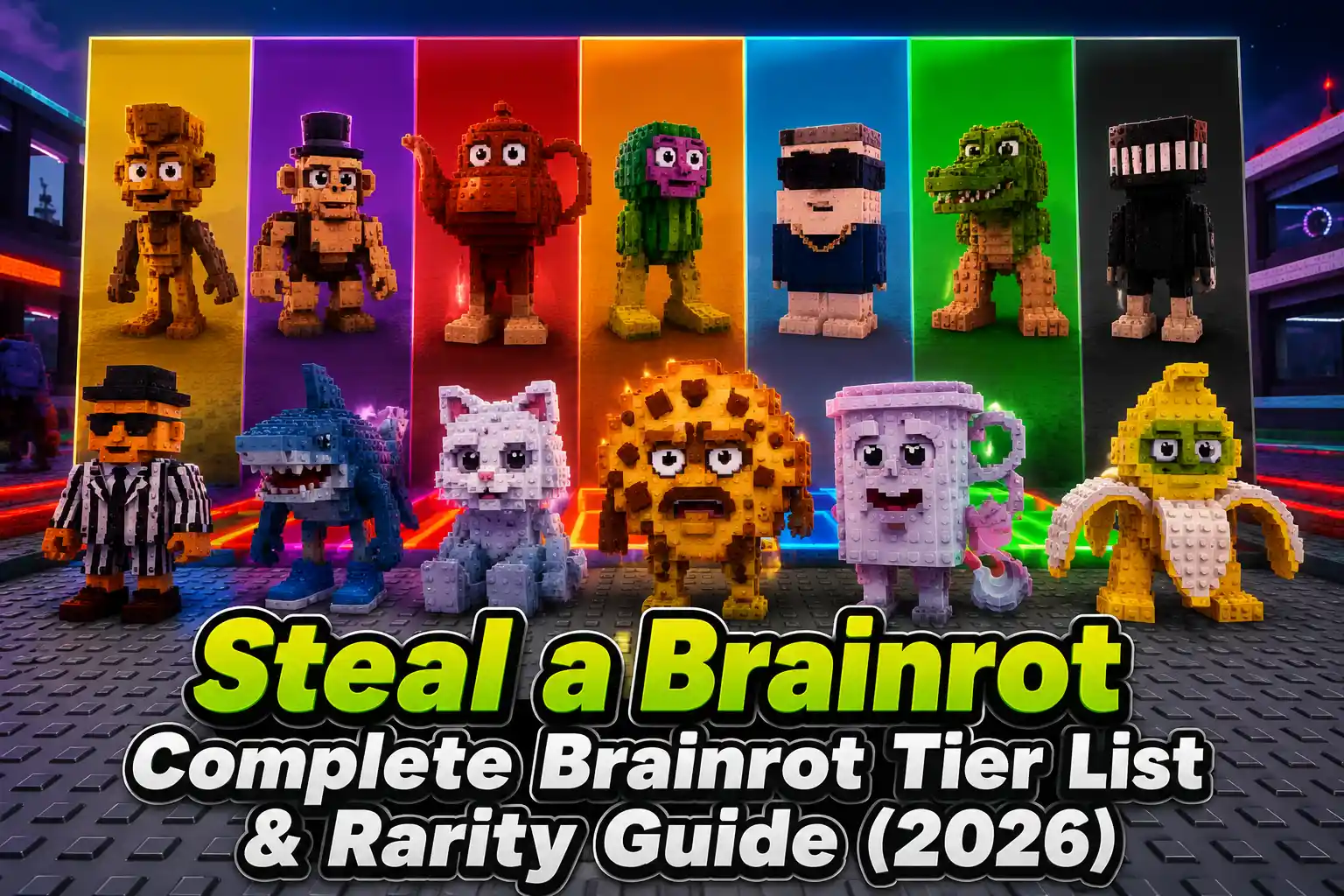
Every Brainrot that spawns on the Red Carpet conveyor belongs to one of eight rarities. Higher rarity generally means a lower spawn chance, a higher buy-in cost, and a bigger income-per-second payout — but “generally” is doing a lot of work in that sentence, because mutations, traits, and event-only units regularly break the pattern.
It’s worth being upfront about something most guides gloss over: Do Big Studios has never published official spawn-rate percentages. Every probability figure floating around the community, including the ones in this article, comes from large-sample tracking by players and third-party trackers, not from the developer. Treat the numbers below as well-tested estimates, not confirmed odds — and expect them to shift slightly after every Saturday update.
The 8 Rarity Tiers, Cost & Income Breakdown
| Rarity | Approx. Spawn Rate | Cost Range | Income Range | Guaranteed Spawn Window |
| Common | ~55% (most frequent) | $25 – $1.7K | $1/s – $14/s | Constant |
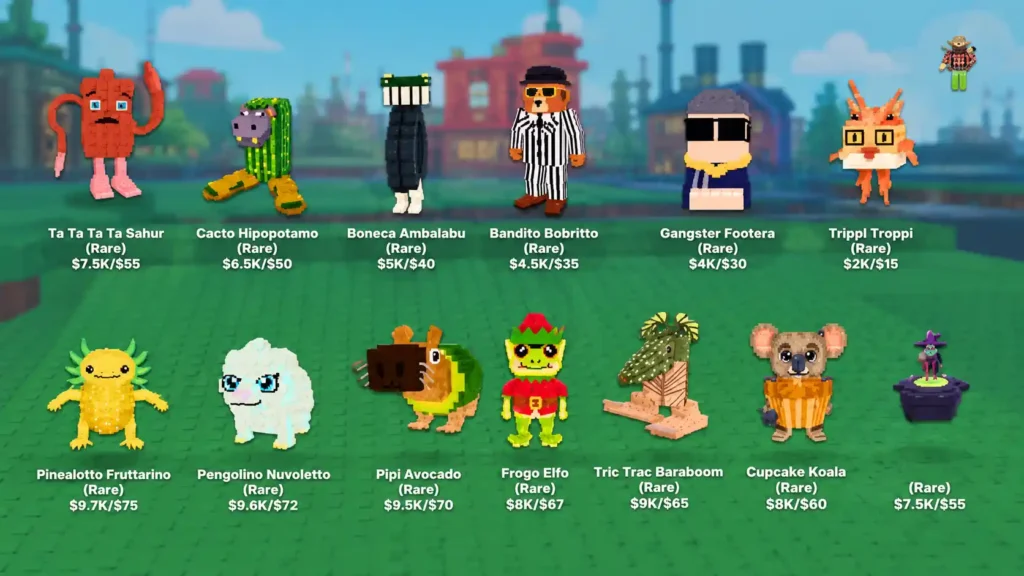
| Rare | Common, less frequent than above | $2K – $9.7K | $15/s – $75/s | Frequent |
| Epic | Uncommon | $10K – $47.5K | $75/s – $325/s | Frequent |
| Legendary | Low | $50K – $347.5K | $300/s – $1.9K/s | At least once every 5 minutes |
| Mythic | Very low | $350K – $6M | $2K/s – $18.5K/s | At least once every 15 minutes |
| Brainrot God | Rare | $5M – $76M | $17.5K/s – $317.5K/s | No guarantee |
| Secret | Extremely rare | $50M – $400B | $300K/s – $400M/s | Event/Ritual/Fuse-dependent |
| OG | Near-zero natural spawn | $450B+ | $450M/s – $1B/s+ | Effectively unobtainable naturally |
A few things worth flagging honestly rather than smoothing over: the Secret tier has the widest income spread of any rarity by far, which is why lumping every Secret-rarity unit into one “tier” on a value list is misleading — a $50M Secret and a $400B Secret shouldn’t be treated the same way. And OG isn’t really a rarity you farm; in practice it’s a rarity you trade, steal, or win through a Ritual, since the natural drop odds are close to zero even after thousands of hours of conveyor watching.
Common and Rare: The Tiers Everyone Outgrows in Minutes
Common Brainrots — things like Noobini Pizzanini, Tim Cheese, and Pipi Corni — exist to teach the base mechanic and get you your first cash flow. Rare brainrots, despite the name, aren’t actually rare; the label is a holdover from the game’s early rarity naming and doesn’t reflect real scarcity. In practice, most players cycle through both tiers inside their first ten minutes of play.
Epic and Legendary: Where the Real Progression Starts
Epic is the first tier where income becomes meaningful — a well-rolled Epic can outpace a poorly-mutated Legendary. Legendary units matter for a second reason beyond income: several of them are hard progression gates. Certain Legendary and Epic Brainrots are required to unlock specific rebirths, which is why some “weak” units on a pure income-per-second chart are still worth keeping in your base until you’ve cleared that requirement.
Mythic and Brainrot God: The Real Mid-to-Late-Game Grind
Mythic is where server-wide competition starts to bite — a guaranteed spawn every 15 minutes on public servers means every player on the map is watching the belt at the same time. Brainrot God sits above it as a genuine gate: spawn odds drop hard enough that most players get their first one through an event or a Ritual rather than raw luck on the conveyor.
Is a Higher Rarity Brainrot Always Worth More?
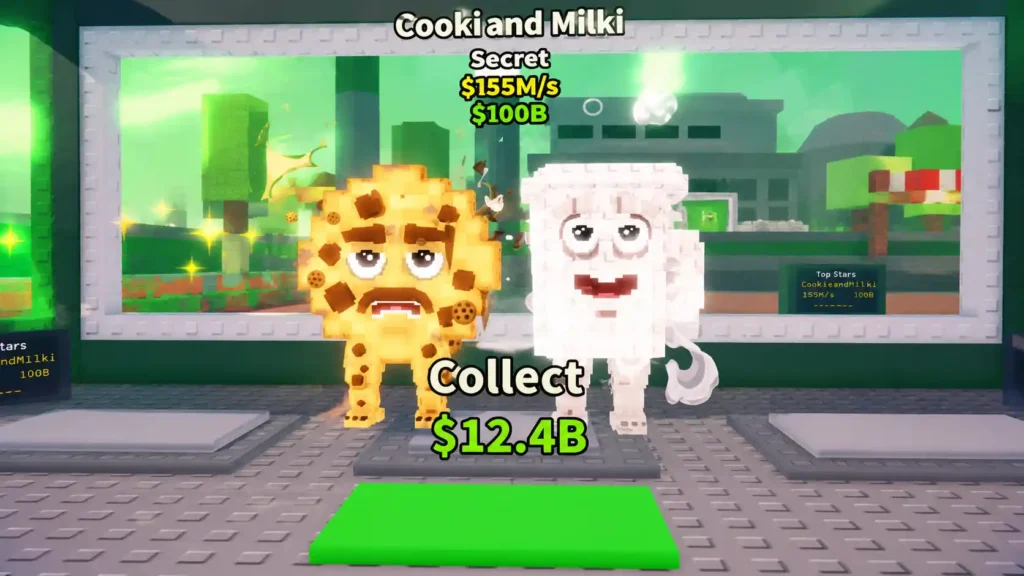
No — and this is the single most common mistake in the community. A Brainrot’s rarity label is a spawn-difficulty rating, not a value rating. Cooki and Milki, for example, is officially Secret rarity but has a comparatively low buy-in cost against an unusually high income-per-second, which is why traders often value it above units that are nominally rarer but earn less. The same logic applies in reverse: a freshly-added Secret with an unconfirmed cost (like several of the units introduced in Update 64) can carry a rarity label that looks impressive while its actual market value is still being priced by the community.
Three factors decide real value, in this order:
- Income per second relative to cost — the actual return on investment, not the sticker price.
- Trade demand — how many players are actively trying to buy or steal it right now.
- Long-term staying power — whether it still earns competitively after three or four more updates, or whether it’s a flash-in-the-pan unit that gets power-crept fast.
Complete Brainrot Tier List (S–D), Ranked by Real Value
This tier list ranks Brainrots by the three factors above, not rarity alone. A unit sitting in S-Tier here earns its spot because of performance, even if two Brainrots sitting side-by-side technically share the same official rarity.
| Tier | What It Means | Who Belongs Here |
| S-Tier | Meta-defining. Pays for itself fast and holds trade value long-term. | Strawberry Elephant, Meowl, Headless Horseman, Skibidi Toilet, Griffin, Hydra Dragon Cannelloni |
| A-Tier | Excellent income-to-cost ratio, strong trade demand, slightly below S-Tier ceiling. | Dragon Gingerini, Dragon Cannelloni, Love Love Bear, Cerberus, Celestial Pegasus |
| B-Tier | Reliable earners that carry a base well without being chase-worthy trade targets. | Cooki and Milki, Hydra Bunny, Bunny and Eggy, Foxini Lanternini |
| C-Tier | Fine for filling slots while you hunt something better; income falls off against upkeep cost. | Rosey and Teddy, Popcuru and Fizzuru, Capitano Moby, La Casa Boo |
| D-Tier | Starter/tutorial units. Replace as soon as you can. | Noobini Pizzanini, Tim Cheese, Pipi Corni, Trippi Troppi |
A quick honesty note on this table: community valuations move fast, sometimes within days of a Saturday update, because new Secret and OG units reshuffle demand before the wider community has agreed on a stable price. If you’re trading, always cross-check a specific unit’s current value against a live tracker before you commit — don’t rely on any static tier list, including this one, as gospel for a trade happening right now.
Mutations and Traits: How a “Weak” Brainrot Outperforms a Rare One
Rarity sets the base income, but mutations and traits are multipliers layered on top, and this is where a lower-rarity Brainrot can genuinely out-earn a higher-rarity one. Mutations are permanent, one-per-Brainrot, and roll randomly off the conveyor or through stealing:
| Mutation | Income Multiplier |
 Gold | 1.25x |
 Diamond | 1.5x |
 Lava | ~6x |
 Rainbow | 10x |
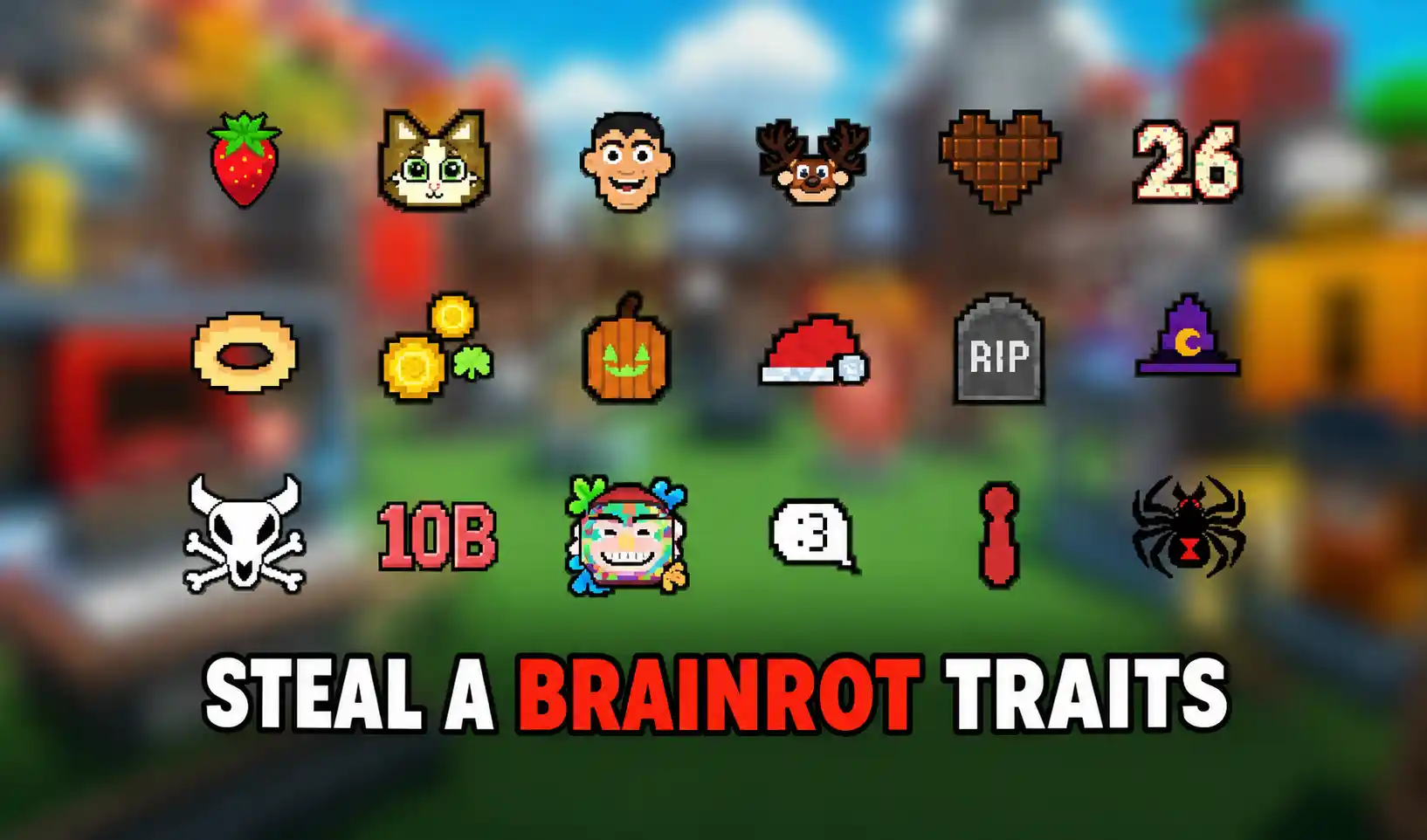
Rainbow is the multiplier every serious player is watching for, since it applies to any rarity — a Rainbow-mutated Rare will often out-earn an un-mutated Legendary. Traits, by contrast, only apply during specific admin-triggered events (Bombardiro, Tung Tung Attack, Glitch, Crab Rave, and others), stack on top of a mutation rather than replacing it, and can push a single unit’s output several multiples higher for the duration they’re active. If you want the full breakdown of every current trait and how each one triggers, our Traits Guide covers the mechanics in more depth than fits here.
How to Actually Move Up the Rarity Ladder
There isn’t one route to the top — the fastest progress comes from combining several at once rather than grinding a single method.
- Red Carpet conveyor — reliable through Mythic, but spawn odds for Brainrot God and above are low enough that waiting on the belt alone is a slow strategy.
- Stealing — becomes genuinely worth the risk once you’re targeting Legendary and up, since lower rarities aren’t worth the retaliation risk. This is also where your own defense matters: a base without a working Grief Shield is an easy target the moment your income starts climbing.
- Admin Abuse events — the developer-run spawns where Lucky Blocks, time-limited units, and exclusive traits appear. For Secret and OG-adjacent units, this is usually the most realistic acquisition path outside of trading.
- Rituals — formation-based summons that can produce Brainrot Gods or higher; our Rituals guide walks through the current confirmed formations.
- Trading — the Trading Plaza is often faster than farming for a specific named unit, especially post-Update units whose in-game spawn is still uncommon.
- Codes and events — redeeming active Steal a Brainrot codes won’t hand you a Secret outright, but the free cash and boosts speed up everything else on this list.
Rarity by Playstyle: What to Actually Chase
New players should ignore rarity chasing entirely for the first few sessions and focus on clearing early rebirth requirements — some Legendary and Epic units are mandatory gates, and skipping straight to Secret-hunting just wastes time you don’t have the base income to support yet. If you’re just starting out, our beginner guide covers the first-hour priorities in more detail.
Mid-game players pushing toward Rebirth 19 and beyond should prioritize Mythic and Brainrot God units with strong income-to-cost ratios over raw Secret rarity, since the rebirth cost curve rewards steady cash flow more than collection prestige at this stage.
Endgame collectors are the ones for whom rarity actually matters most, since trade value and index completion become the goal rather than pure income. This is also where flagged units matter: something like Sir Mangus, still missing a confirmed cost and image at the time of writing, is worth tracking specifically because its final valuation hasn’t settled yet — getting in early on an unpriced Secret is one of the few ways collectors still get ahead of the market.
Rarity Tier List Mistakes That Actually Cost Players Money
The most expensive mistake isn’t picking a bad Brainrot — it’s holding onto a technically-rare one out of sunk-cost thinking after the market has already moved past it. A close second: ignoring mutation potential entirely and buying based on rarity label alone, which is how players end up overpaying for an un-mutated Secret when a Rainbow-mutated lower-rarity unit would have out-earned it for a fraction of the cost.
The third mistake is treating every Secret-rarity unit as equally safe to hold. As the cost/income table above shows, the spread inside that single rarity is enormous — do the income-per-cost math on a specific unit before assuming “Secret” alone makes it a good hold.
Frequently Asked Questions
Final Word
Rarity tells you how hard something is to find. It doesn’t tell you what it’s worth. The strongest collections in Steal a Brainrot right now are built by players who check income-per-cost and trade demand before rarity label — and who stay current, since this economy reshapes itself every Saturday. As of Update 64, that’s still the safest rule in the game, and it’s likely to stay true well past whatever ships next weekend.
Steal a Brainrot is developed by SpyderSammy and Do Big Studios on Roblox. Rarity, cost, and income figures in this guide are compiled from large-sample community tracking, since official spawn-rate data has not been published by the developer. Values shift after Saturday updates — verify current trade prices before committing to a trade.

Steal a Brainrot Update 64: Honey Bee Base, the Bee Admin Machine & 4 New Secrets
Read Guide
How to Unlock Rebirth 19 in Steal a Brainrot: Requirements & Rewards
Read Guide
Steal a Brainrot RNG Machine Brainrot List: Every Confirmed Brainrot, Price & Rarity
Read Guide
How to Summon All Rituals in Steal a Brainrot: Every Formation & Payout Explained
Read Guide
Steal a Brainrot Trading Guide: How the Trading Plaza & Base Skins Actually Work
Read Guide