
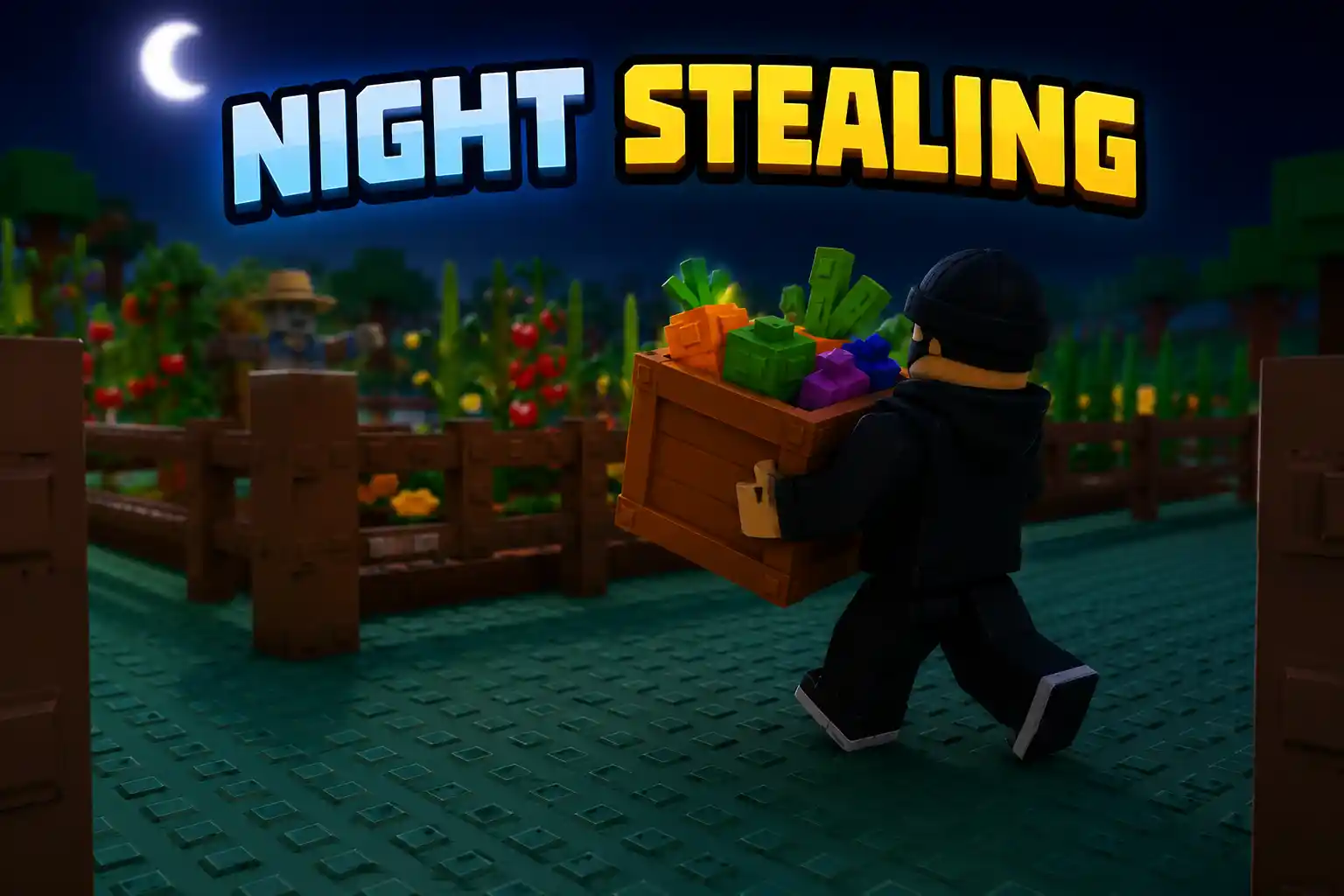

The moment the sky goes dark in Grow a Garden 2, your farm stops being safe. Night stealing lets any player walk onto an unattended plot and carry off your crops for free, and the only guaranteed way to stop them is to be standing inside your own garden’s fence when night hits — that locks it instantly. Beyond that, a mix of defensive gear, defensive plants, a properly chosen defensive pet, or a private server covers you when you can’t be online for every night cycle.
The rest of this guide breaks down exactly how the mechanic works, what actually stops a raid, and what’s still unconfirmed so you don’t build your defense around a rumor.
When Does Night Actually Start — And How Long Does It Last?
Stealing is tied directly to the day-night cycle, and it’s baked into the game’s own description: it warns that once the sun goes down, “stealing starts.” There’s no way to opt out of the cycle itself — only out of being a target during it.
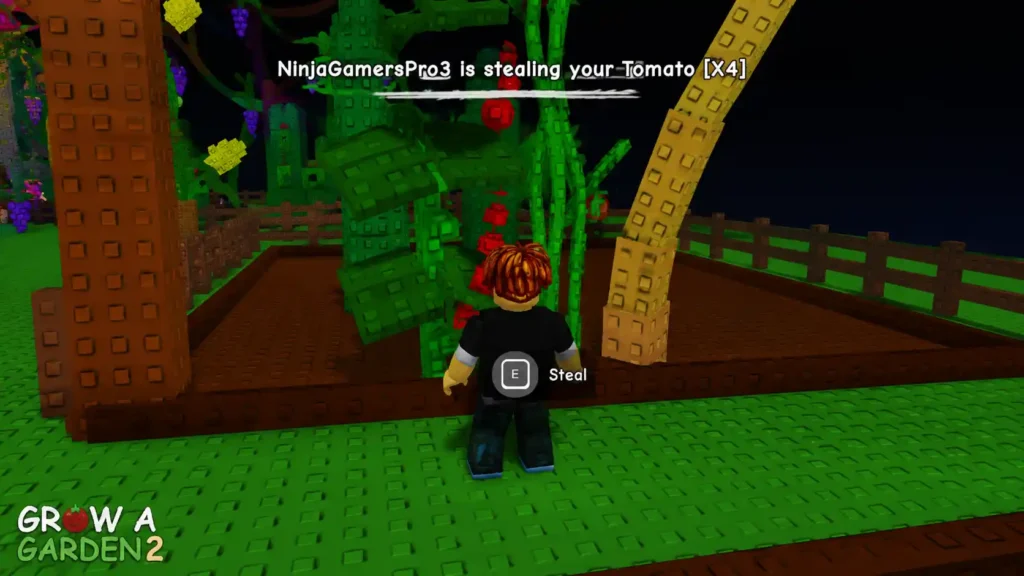
The exact length of the night window isn’t pinned down by an official patch note, and after comparing community write-ups against my own runs, the reported figures land somewhere between roughly two and two-and-a-half minutes, usually preceded by a short dusk warning of around 30 seconds before the raid window actually opens. Treat that dusk period as your cue to get inside your fence, not as free farming time. If you only take one number away from this section, take this: the window is short enough that indecision costs you more than a wrong decision does.
How Stealing Works, Step by Step
Raiding a plot isn’t automatic — it takes a deliberate sequence, which is actually good news for defenders because it gives you time to react:
- Find an unlocked garden. A plot only becomes stealable if its owner isn’t inside the fence when night falls.
- Interact with a crop. Walking up to ripe produce and pressing the interact key picks it up, but it isn’t “yours” yet.
- Carry it home on foot. Teleport buttons are disabled the entire time you’re holding stolen goods, so the walk back is the riskiest part of the theft.
- Reach your own garden. Only once the thief makes it back to their own plot does the crop actually change ownership.
Two crop types slow this down on purpose: Bamboo and Mushrooms take roughly three seconds longer to lift than everything else, which is just enough extra exposure to get a defender’s attention. It’s also worth knowing that players who’ve just joined a server usually spawn outside their own garden for a few seconds — a small window that experienced raiders specifically watch for, so don’t assume you’re safe the instant you load in.
Does Staying in Your Garden Really Stop a Raid?
Yes, and it’s the single most reliable defense in the entire game. Standing inside your own garden’s boundary locks it the moment night begins, and any theft attempt against a locked plot fails automatically — no gear, Sheckles, or timing required on your part. This is exactly why active presence beats passive defense: a base loaded with expensive traps still loses to a raider if nobody’s home, while an empty plot with nothing but a fence and an online owner usually survives the night untouched.
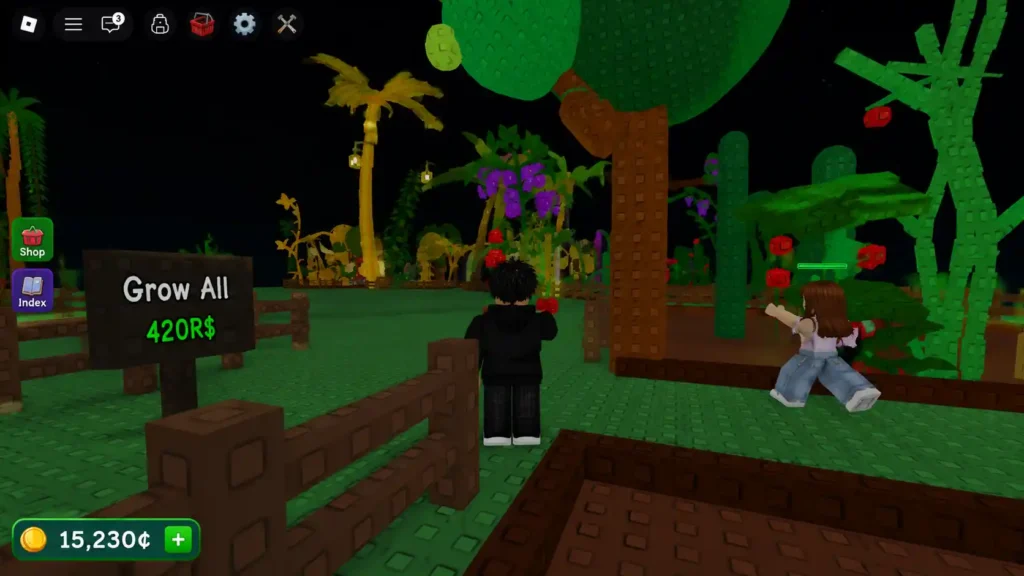
The trade-off is obvious — you can’t farm someone else’s garden while you’re babysitting your own, so most experienced players split their sessions: lock down and defend on nights they’re growing something valuable, then go raiding on nights they’ve already harvested and sold.
The Full Defensive Toolkit: Gear, Plants, and Pets
If you can’t be glued to your screen every night, layer these on top of simple presence. Costs and exact per-item effects still vary by source and haven’t all been pinned down in official patch notes, so treat anything marked “unconfirmed” as a starting point rather than a guarantee.
| Type | Item | What It Does |
| Active tool | Shovel | Melee weapon — hit a fleeing thief to make them drop your crop before they get home |
| Active tool | Freeze Ray | Temporarily freezes an intruder in place |
| Active tool | Flashbang | Disorients raiders inside your garden |
| Active tool | Vine Wrapper | Restrains a trespasser so you (or a teammate) can catch up |
| Active tool | Power Hose | Knocks intruders back and out of your plot |
| Passive gear | Gnome (~100,000 Sheckles) | Automatically attacks anyone trespassing in your garden — exact combat behavior isn’t fully documented yet |
| Passive gear | Mushrooms | Listed as defensive gear in multiple community guides; specific effect still unconfirmed |
| Defensive plant | Dragon’s Breath | A high-tier plant that actively fights back against intruders |
| Defensive plant | Cactus | Damages or deters players who wander too close |
| Defensive pet | Bee | Patrols your garden and stings anyone who enters without permission, buying you reaction time |
If you’re still deciding which pet to run as your primary, it’s worth cross-checking a defensive option like Bee against your farming needs — the best pets guide breaks down which ones pull double duty for both mutations and guard work.
Can You Get a Stolen Crop Back After It’s Taken?
Sometimes, yes. Because the thief has to physically carry the crop home on foot with teleporting disabled, you get a real window to intervene. Catching them with a Shovel or another active tool before they cross back into their own garden makes them drop what they took, which is why chasing a raider down is a legitimate defensive strategy in its own right — not just a last resort. Once they make it home, though, the crop is gone for good.
The Werewolf Twist: How the Fall Harvest Update Changed Night Stealing
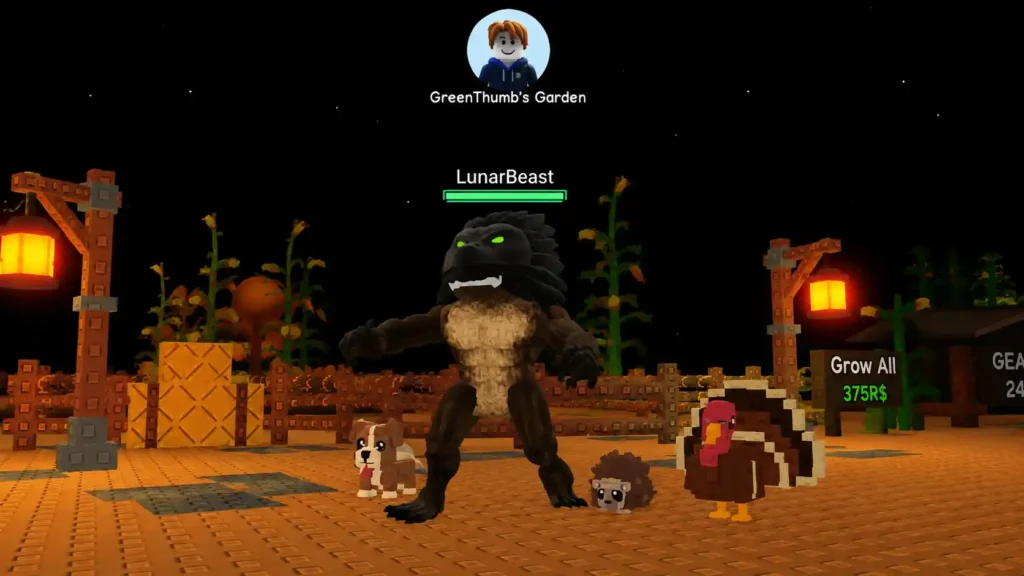
The Fall Harvest World update, which went live on August 2, 2026, added a variant of night stealing that only applies inside that limited-time world: instead of every player being able to raid freely, one random player becomes the Werewolf each night — enhanced speed, and the only one who can steal during that cycle. Landing a Shovel hit on the Werewolf reverts them to human form and hands the role to whoever hit them, so the ability to steal actually changes hands throughout the night rather than staying with one player. The update also added a persistent on-screen notification when you’ve been robbed, so you’ll know before you even get back to your plot.
Fall Harvest World runs on its own Leaves currency rather than Sheckles, which changes what’s actually worth defending while you’re there — the Leaves currency guide covers how that economy works if you’re splitting time between Garden Valley and the seasonal world, and the Cornucopia quest guide is worth a look if you’re trying to figure out what all that risk is actually buying you.
Are Private Servers Really the Only Safe Option?
For guaranteed protection, yes. Running a private server — free to set up from the Servers option on the game’s page — is the only way to zero out raid risk completely, because no outside player can enter it. It’s the right call if you’re stepping away for a long stretch with a valuable mutation crop mid-grow, but it also means giving up the ability to raid other players yourself, since a private server has nobody else in it to steal from.
Which Crops Are Actually Worth Building Defenses For?
Not every plot is worth a raider’s time. Common and Uncommon crops are low-value enough that most thieves skip them entirely — the walk home isn’t worth it for a handful of Sheckles. The moment you commit resources to a Rare-tier crop or higher, that calculus flips, and it’s worth checking current prices before you decide how much gear to invest in guarding a harvest — the value list is the fastest way to see whether tonight’s crop is actually worth losing sleep over.
Mistakes That Get New Players Raided on Night One
- AFK-farming with no plan. Leaving the game running unattended overnight on a public server with a valuable crop growing is close to an open invitation.
- Assuming a locked garden stays locked forever. It only stays locked while you’re physically inside it — stepping out to sell crops or check the shop reopens the window.
- Ignoring the dusk warning. That 30-second transition exists specifically so you can get back inside before the raid window opens; wasting it browsing the shop menu is a common and avoidable mistake.
- Skipping cheap defense because it feels unnecessary early. A single Gnome is inexpensive enough that there’s little reason not to have one running the moment you’re growing anything above Common rarity. Redeeming active codes for a bit of extra Sheckles makes that early investment even easier to justify.
Night stealing is what separates Grow a Garden 2 from the original game’s completely safe farming loop, and that risk is intentional — it’s meant to reward players who stay engaged rather than those who just let crops grow untouched. Understanding the mechanic beats fearing it: lock your garden when it matters, invest in cheap defense early, and save the private server for the nights you genuinely can’t afford to lose a harvest.
Frequently Asked Questions

Best Pets for Mutations & Farming in GAG2: Full Ranked Guide
Read Guide
Grow a Garden 2 Codes (August 2026): 4 Working Codes Right Now
Read Guide
Leaves Currency Guide: How to Earn, Spend & Manage It
Read Guide
Cornucopia Quest Guide: Pilgrim, Quests & Shadow Dragon Odds
Read Guide
Double or Nothing: How Steven’s 50/50 Gamble Really Works
Read Guide