

You just spent forty minutes filling your inventory, and Steven is standing at the Sell Stand offering to double every Sheckle of it in one click. It sounds like free money. It isn’t, and the way this mechanic is built means most players who chase it end up worse off than if they had just sold normally.
Double or Nothing is the gambling mechanic that replaced the old Bargaining system at Steven’s Sell Stand. Instead of paying a fee to haggle for a better price, players now risk their entire eligible crop inventory on a coin-flip: win, and the total sale value doubles instantly; lose, and everything wagered disappears with no payout at all. It’s simple to understand and brutal to misuse, which is exactly why it has become one of the most talked-about systems in Fall Harvest World.
This guide breaks down exactly how the mechanic works, what triggers it, what it does to your Sheckles and crops, and how experienced farmers decide when a gamble is actually worth taking.
What Double or Nothing Replaced at Steven’s Sell Stand
Before this system existed, players used a mechanic called Bargaining to negotiate a higher sell price with Steven. Bargaining cost Sheckles equal to a percentage of your inventory’s value upfront, and Steven would either raise his offer, hold firm, or — rarely — hand out a much bigger payout. It was a fee-based negotiation, not a pure gamble, so a bad roll only cost you the negotiation fee rather than your whole harvest.
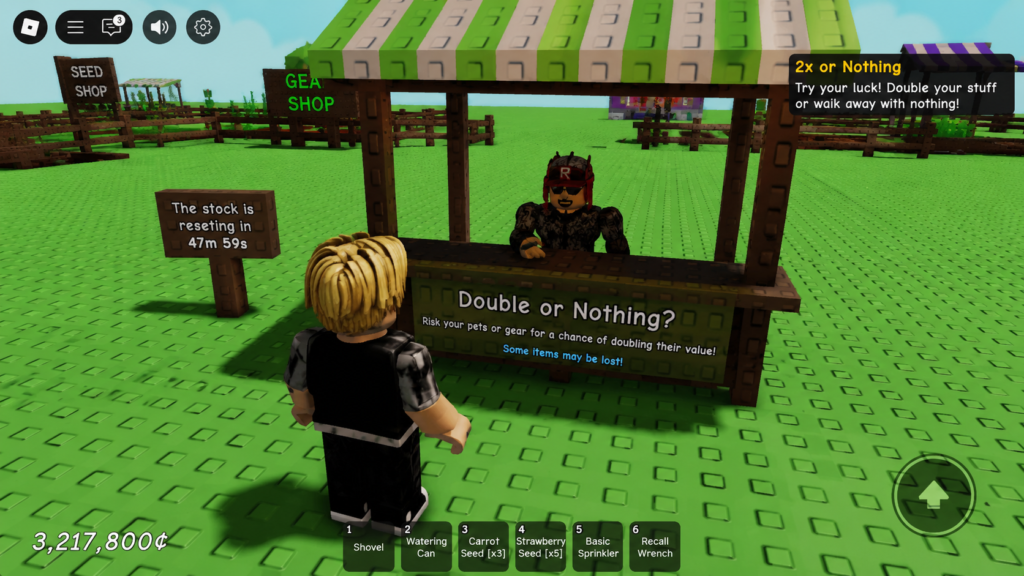
Double or Nothing scrapped that structure entirely. There’s no upfront fee, no negotiation dialogue, and no partial outcomes. You either walk away with double the Sheckles or you walk away with nothing, which is exactly where the mechanic gets its name. The table below shows how the two systems actually compare.
| Feature | Bargaining (Old) | Double or Nothing (Current) |
| Cost to attempt | 55% of inventory value in Sheckles | Free — no entry fee |
| Possible outcomes | Higher price, same price, or legendary bonus | Full double or total loss |
| Risk to inventory | None — only Sheckles fee at risk | Entire eligible inventory |
| Cooldown between attempts | Yes | None on successful streaks |
| Favorited crops affected | Cannot be bargained | Cannot be wagered |
How to Trigger the Mechanic at the Market
Getting to Double or Nothing takes seconds once you know where to look. Head to the market area in your garden where you’d normally cash in a harvest, and interact with Steven at his stand.
- Walk up to Steven’s Sell Stand with crops sitting in your inventory.
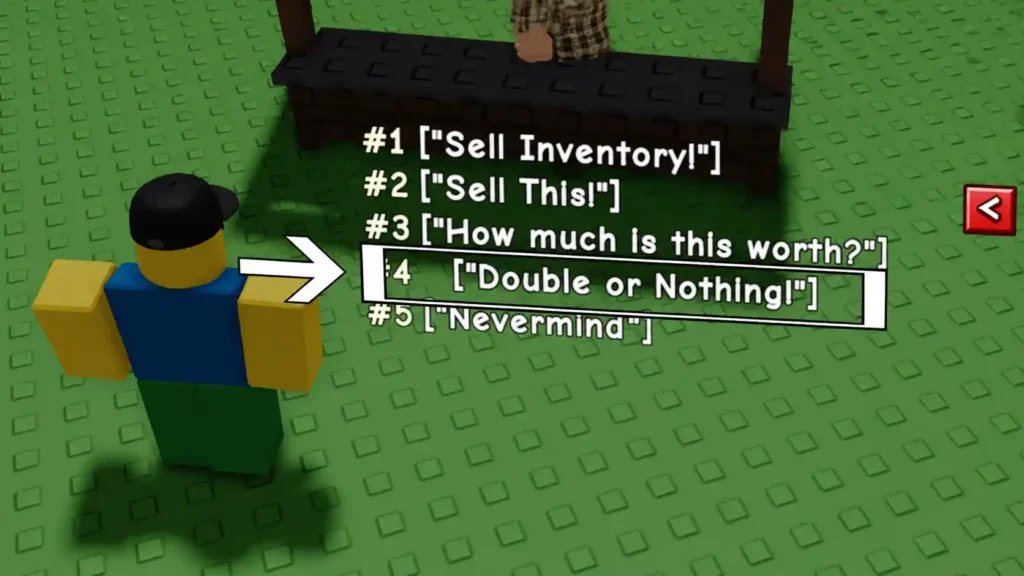
- Open the selling menu and select the Double or Nothing option instead of a standard sale.
- Confirm the prompt — this step exists specifically as a safeguard against misclicks, since the wager includes your entire eligible inventory automatically.
- Watch the outcome resolve immediately. There’s no waiting period and no animation you can skip past to change your mind.
Every player has access to this feature by default. There’s no level requirement, no unlock quest, and no item you need to own first — it became a base part of the selling flow the moment it replaced Bargaining.
The Real Odds Behind Every Flip
Community testing and in-game data consistently point to a 50/50 probability on each individual attempt, regardless of what crops are in your inventory, how much they’re worth, or how many times you’ve won or lost in a row. The odds of landing on either outcome sit flat at 50%, independent of the crops involved, and there’s currently no confirmed way to shift those odds in your favor.
That flat 50% is where the mechanic gets misleading. A single coin flip at 50/50 feels fair. But Double or Nothing isn’t a single flip if you keep pushing your luck — and the math on repeated 50/50 gambles turns against you fast:
- 1 flip: 50% chance to keep your winnings
- 2 flips in a row: 25% chance
- 3 flips in a row: 12.5% chance
- 5 flips in a row: roughly 3% chance
Every extra round you chain multiplies your risk of losing everything, even though each individual flip still looks like a coin toss. This is exactly why some players in the community have labeled the mechanic unfavorable, even calling it a “scam” once they realized how quickly the odds compound against repeated use.
What Happens to Your Inventory on a Win or a Loss
The mechanic targets your entire eligible fruit inventory at once — you can’t cherry-pick individual crops to include, and there’s no partial wager option. Here’s what changes depending on the outcome:
On a win: The total sale value of your wagered inventory doubles. Items themselves aren’t duplicated or returned to you — you receive Sheckles equal to double the sale price, and the crops are gone, sold as part of the transaction. Because there’s currently no cooldown, you can immediately gamble again if you choose to.
On a loss: Every non-favorited item included in the gamble disappears with zero payout. If you had already chained a few wins before the loss, all of that accumulated value vanishes with the final failed flip — the streak resets completely rather than protecting your earlier gains.
Favoriting: The Only Real Protection You Have
There is exactly one way to keep specific crops out of a Double or Nothing wager, and it’s the same tool players already use to stop accidental sales: favoriting. Any crop marked as a favorite is automatically excluded from the gamble pool and cannot be lost, no matter how the flip resolves.
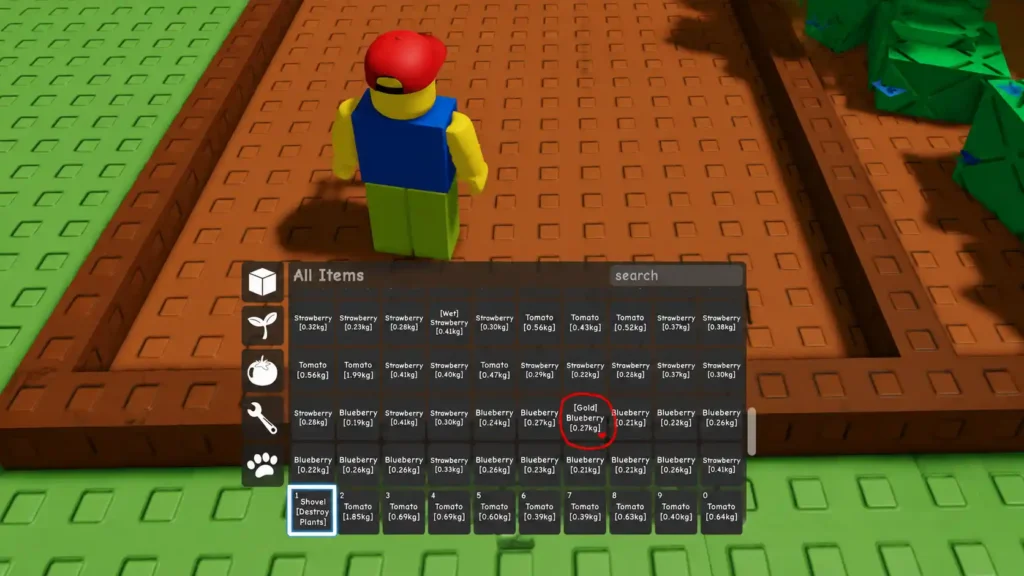
This matters enormously if you’re farming anything rare, event-limited, or heavily mutated. If you’ve spent real time growing something you don’t want to risk — a prized pumpkin, a rare mutation, or crops you’re saving to fund an upgrade like the Magic Mail tiers — favorite it before you go anywhere near Steven’s stand. The mechanic pulls from your entire unfavorited inventory automatically, so there’s no confirmation step that lets you deselect specific items after the fact.
Chaining Streaks: Why There’s No Cooldown
Unlike most gambling systems in Roblox farming games, Double or Nothing doesn’t lock you out after a win. You can trigger it again immediately, which is exactly how players build up large streaks — and exactly how those same streaks get wiped out in one bad flip. Since a failed gamble ends any value built up through previous successful doubles, chaining is a pure momentum play: each additional round adds more to lose without adding any extra edge in your favor.
Some content creators have documented what they call a streak bug, where certain conditions appear to preserve or extend a winning run outside the normal 50/50 pattern. Treat any claim like this with heavy skepticism — undocumented exploits tied to a core economy system tend to get patched quickly, and Sheckles or items earned through a bug are rarely safe to rely on long-term.
The Duplication Exploit Players Are Talking About
Alongside streak claims, some players have reported a separate duplication bug connected to how the game registers claim states during the gamble. There’s no official confirmation this is an intended feature, and exploits touching a paid or core economic system are historically among the first things a developer patches. If you come across items or Sheckles gained this way, don’t treat them as a permanent part of your inventory — a rollback or item removal is a realistic outcome once the issue is addressed.
Best Crops to Wager (And What to Never Touch)
Not every crop belongs in a Double or Nothing gamble. The smartest players treat this feature as a way to squeeze extra value out of items they’d be fine losing, not as a shortcut to real progression.
| Crop Type | Recommended for Wagering? | Why |
| Low-value, fast-growing crops (Strawberries, Blueberries) | Yes | Quick to regrow, low opportunity cost if lost |
| Mid-tier crops grown in bulk | Small batches only | Losses are recoverable but noticeable |
| Rare or heavily mutated crops | No | Long grow time makes a loss extremely costly |
| Event-limited or seasonal items | No | Often can’t be regrown once an event ends |
| Anything funding an upgrade (gear, seeds, Leaves purchases) | No | A loss delays your entire progression plan |
If your farm is still small, it’s worth holding off on this mechanic altogether. Early-game Sheckle income is tight enough without gambling away a harvest you were relying on for your next seed purchase — beginner farms simply don’t have the buffer to absorb a bust the way an established garden with top-tier pets and steady production does.
Daily Deal vs. Double or Nothing: Which Actually Pays More?
Steven’s stand also offers a Daily Deal, which buys a single fruit at roughly 2.2× its normal sell value on a fixed cooldown. It’s tempting to compare the two directly, but they solve different problems:
- Daily Deal guarantees a fixed multiplier with zero risk, but it’s limited to one fruit and locked behind a cooldown timer.
- Double or Nothing has no cap on how much value it can multiply and no cooldown, but every attempt carries a genuine 50% chance of total loss.
The practical approach most experienced players settle on: route your rarest or highest-value single item through the Daily Deal for a guaranteed payout, and only send low-value bulk crops through Double or Nothing.
Common Mistakes That Drain Player Inventories
A surprising number of Sheckle losses in Fall Harvest World trace back to a handful of repeatable mistakes rather than genuine bad luck:
- Assuming a loss makes the next flip “due” to win. Each flip is independent — the 50% odds reset every single time, regardless of your recent history.
- Wagering without checking what’s actually included. Because the gamble pulls in your full unfavorited inventory, players occasionally lose crops they forgot were even carrying value.
- Continuing to chain after a win that already covers a real upgrade. If a successful double already funds your next gear purchase or seed restock, pushing for one more round just adds unnecessary risk.
- Treating unverified community odds as confirmed mechanics. Claims about guaranteed streaks or hidden win-rate boosts aren’t backed by official data, and building a strategy around them is a fast way to lose a harvest.
- Using the gamble as a main income strategy. Reliable Sheckle growth still comes from consistent farming cycles — planting, watering, harvesting, and reinvesting — not from repeated coin flips.
Is Double or Nothing Worth Using in Fall Harvest World?
Used sparingly, yes — as a bonus, not a strategy. Wagering a batch of low-value, quick-to-regrow crops for a shot at doubling your Sheckles is a reasonable way to add a little extra income with minimal downside. Used aggressively, the math works against you every single time you chain another flip, and a single bad roll can erase progress that took real effort to build, especially if it interrupts plans tied to bigger goals like completing Cornucopia Quest rewards or saving for a rare pet from the Admin Party rotation.
The mechanic rewards discipline far more than it rewards confidence. Sell your valuable, hard-to-replace crops the normal way, keep enough Sheckles reserved for your next seed and gear purchases, and only send genuinely disposable crops into the gamble. That’s the difference between Double or Nothing working as a fun side bonus and it quietly setting your entire garden back.
Frequently Asked Questions
Final Thoughts
Double or Nothing is one of the simplest mechanics in Grow a Garden 2 to explain and one of the easiest to misuse. A flat 50/50 coin flip sounds harmless in isolation, but every additional round you chain compounds the risk against you, and the crops you lose don’t come back with a patch note. Favorite anything you can’t afford to lose, keep your wagers small and disposable, and let the mechanic stay what it’s designed to be — a bonus on top of steady farming, not a replacement for it.
For general background on the mechanic’s history and current documented behavior, the Grow a Garden 2 Fandom wiki and the community-run Miraheze wiki both maintain detailed, regularly updated pages worth cross-checking against in-game behavior as updates roll out.

Best Pets for Mutations & Farming in Grow a Garden 2 (Full Ranked Guide)
Read Guide
Leaves Currency Guide: Earn, Spend & Manage the Fall Harvest Economy
Read Guide
Cornucopia Quest Guide: Pilgrim, Rewards & Shadow Dragon Odds
Read Guide
Atlantic Giant Pumpkin: Price, Stock Chance & Is It Worth 600,000 Leaves?
Read Guide
Magic Mail Guide: Every Tier, Price & How to Use It (2026)
Read Guide