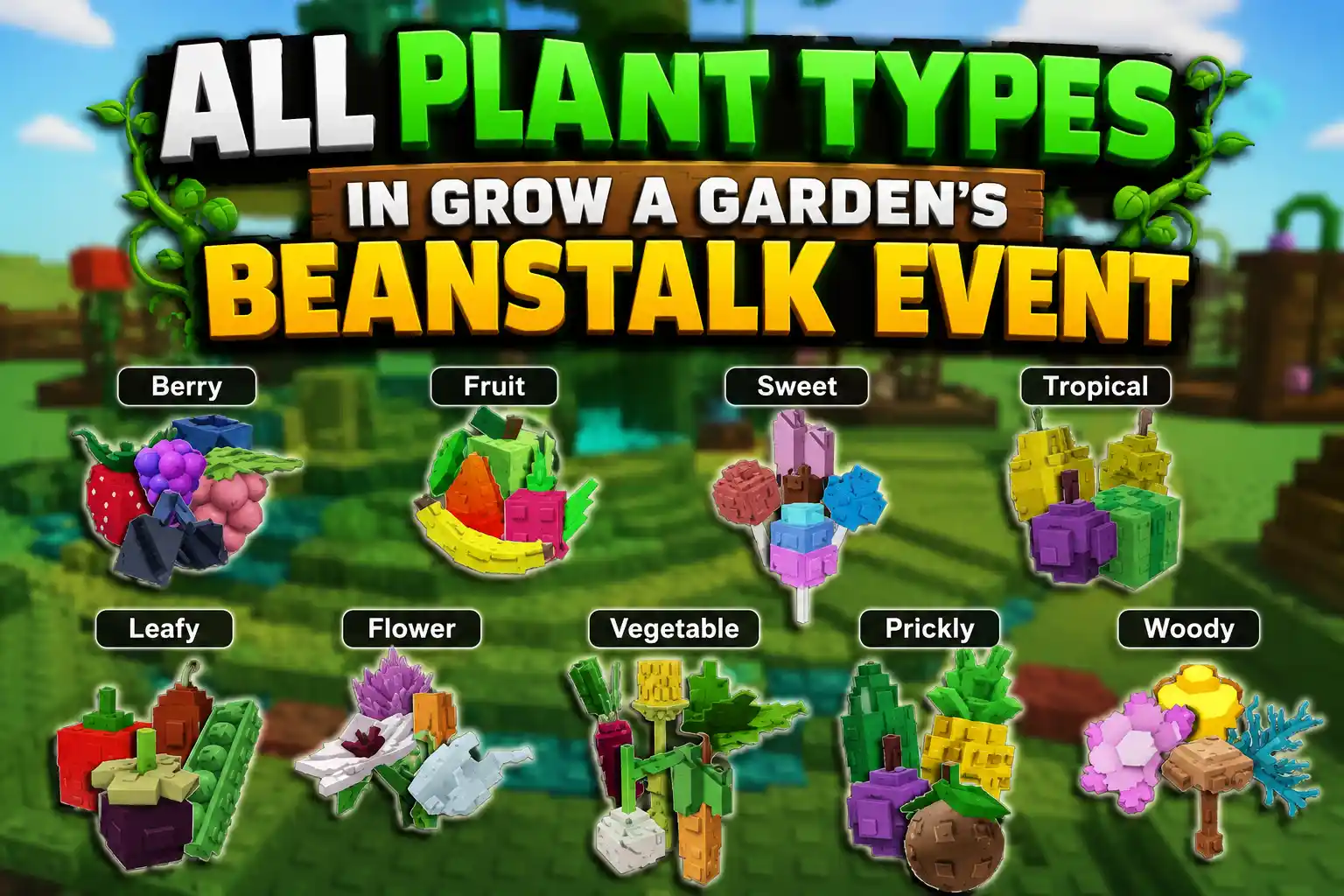

Nineteen. That’s how many official plant types exist in Grow a Garden right now, and most players only ever learn the six or seven that show up constantly — Fruit, Vegetable, Woody, maybe Flower if they’ve paid attention. The other dozen sit quietly in the background until Jack asks for something like Zen or Toxic and half the server goes silent.
This isn’t a submission checklist for the Beanstalk Event — for that, our full trait-by-trait list of what to give Jack already covers every crop under every category. What follows here is the bigger picture: how the type system itself is built, which categories are stacked with dozens of options and which ones are genuinely thin, where the rarity actually sits inside each category, and why a crop’s type matters for more than just one event.
How the Plant Type System Actually Works
Every crop in Grow a Garden carries at least one type tag, and most carry two or three at once. A Watermelon, for instance, is simultaneously Fruit, Leafy, Summer, Sweet, and Tropical — five tags on a single seed. That overlap is exactly why some crops feel like they’re always useful no matter what’s being asked for, while others, like Foxglove or Nightshade, only ever satisfy one narrow box.

The system predates the Beanstalk Event and reaches further than it, too. Newer crops like the Poseidon Plant are explicitly tagged as a specific type — in its case, Stalky — because that tag determines which items and effects interact with it, not just whether it counts for Jack’s hourly request. Type is closer to a crop’s genre than a cosmetic label, which is part of why a full breakdown of the system is worth having on its own.
Every Plant Category, Ranked by How Many Crops Are In It
Based on the currently tracked 2026 roster, here’s how the 19 categories stack up by size. This shifts slightly with every patch as new crops get added or reclassified, so treat the exact counts as a snapshot rather than a permanent number.
| Type | Tracked Crops | Notable Size |
| Leafy | 53 | Largest category by far |
| Flower | 42 | Second-largest |
| Fruit | 37 | Deep, high-value roster |
| Summer | 31 | Mostly seasonal-obtainable crops |
| Sweet | 23 | Tied |
| Vegetable | 23 | Tied |
| Stalky | 21 | |
| Woody | 20 | |
| Zen | 14 | Skews high-rarity |
| Prickly | 13 | |
| Tropical | 12 | |
| Prehistoric | 11 | Event-exclusive heavy |
| Night | 10 | |
| Spicy | 10 | |
| Berry | 9 | |
| Fungus | 7 | Several unobtainable entries |
| Candy | 6 | |
| Sour | 5 | Smallest common-use category |
| Toxic | 2 | Only Foxglove and Nightshade |
Why Leafy, Flower, and Fruit Dwarf Everything Else
These three categories aren’t just popular — they’re the game’s default “catch-all” tags. Anything with visible foliage tends to pick up Leafy on top of its other type, which is why a fruit tree crop like Apple or Peach carries both Woody and Leafy at once. Flower works the same way for anything blooming, which is how a crop like Moon Blossom ends up tagged Flower, Leafy, Night, and Woody simultaneously.
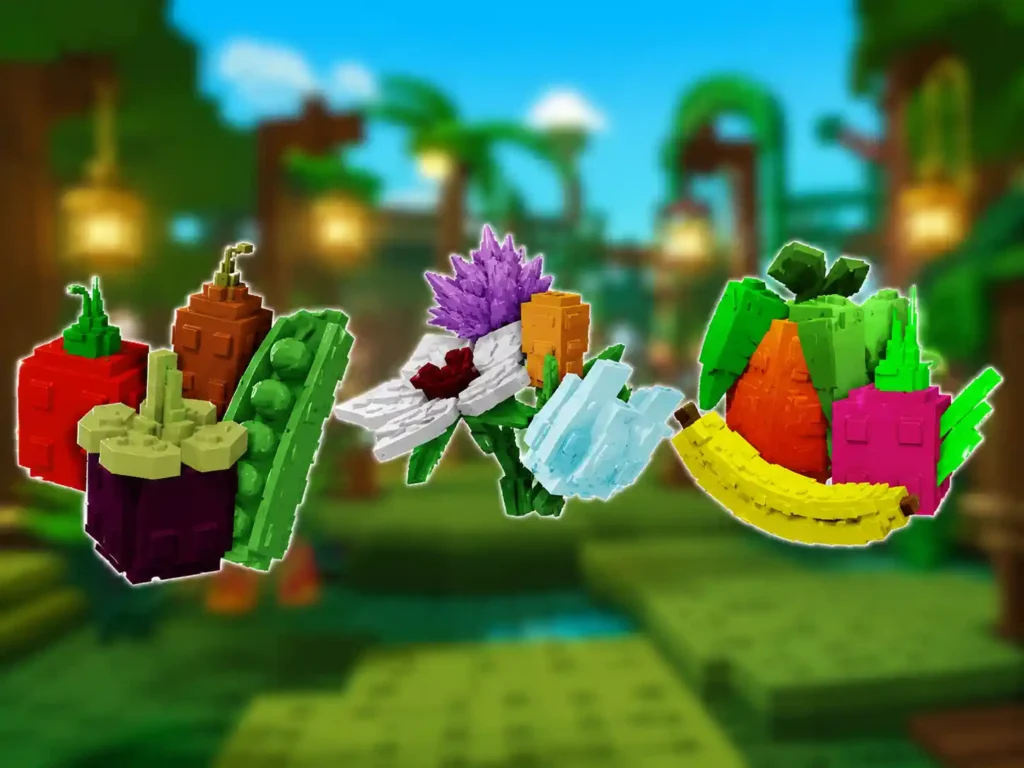
In practice, this means a handful of high-overlap crops end up doing most of the heavy lifting across the whole system. Strawberry, Blueberry, and Watermelon alone cover roughly half of the 19 categories between them, which is a big part of why keeping a rotation of those three growing tends to keep players covered no matter what’s requested.
The Thinnest Categories: Where Real Scarcity Lives
Toxic is the extreme case — only Foxglove and Nightshade carry the tag, and neither is a beginner-friendly seed. Sour isn’t much deeper at five crops (Cranberry, Lemon, Lime, Passionfruit, Starfruit), though at least two of those are common Seed Shop staples. Fungus sits at seven tracked crops, and several of them — Mega Mushroom and Sinisterdrip among them — are admin-exclusive or otherwise currently unobtainable through normal gameplay, which makes the functional pool even smaller than the raw count suggests.
Candy rounds out six crops, most of which are tied to seasonal shops (Easter Egg, for example) rather than the standard Seed Shop rotation. If any of these four categories come up as a request, checking what you already have on hand is faster than trying to farm one from scratch.
Rarity Doesn’t Spread Evenly Across Categories Either
Type determines what a crop qualifies as. Rarity determines how many points or how much value it carries — and rarity isn’t distributed evenly across categories. Woody crops span the full range from Uncommon (Rhubarb) all the way to Prismatic (Giant Pinecone) and even Transcendent (Maple Resin), giving players a genuine ladder to climb.
Zen, on the other hand, leans hard toward the top of the rarity chart. Serenity, Zenflare, and Maple Apple are all Divine-tier or higher, and there’s no confirmed Common-tier Zen crop in the current roster — which is exactly why a Zen request tends to catch newer gardens with nothing to submit. Here’s the general point scale that applies once a crop’s type has already qualified it:
| Rarity | Points per Submission |
| Common | 1 |
| Uncommon | 2 |
| Rare | 3 |
| Legendary | 4 |
| Mythical | 5 |
| Divine | 6 |
| Prismatic | 7 |
| Transcendent | 8 |
Where Each Category’s Crops Actually Come From
This is the part most trait lists skip entirely. Type doesn’t just describe a crop — it hints at where you’re likely to find one:
- Standard Seed Shop staples (Apple, Carrot, Tomato, Strawberry) cover the bulk of Fruit, Vegetable, Berry, and Leafy.
- Sprout Seed Packs, exclusive to the Beanstalk Event and purchasable for 50,000,000 Sheckles from Goliath’s Goods, are the main source for several of the newest additions — Poseidon Plant, Mangosteen, Gleamroot, and Duskpuff among them.
- Seasonal or event-locked shops (Honey Shop, Twilight Shop, Summer Merchant Shop) fill in gaps for categories like Night, Summer, and Tropical with crops that rotate out once the season ends.
- Goliath’s Goods, unlocked by growing the Beanstalk multiple times, sells a handful of higher-rarity crops like Amberheart directly.
What’s New in the 2026 Roster — and Which Categories They Landed In
The 2026 Beanstalk Event brought a fresh batch of crops, and not all of them fit where players initially expected:
- Poseidon Plant — confirmed Stalky-type, Mythical rarity, multi-harvest, obtainable through Sprout Seed Packs.
- Princess Thorn — confirmed Prickly and Leafy at once, one of the rarer pulls from Sprout Seed Packs based on early community reports.
- Romanesco — classified as Vegetable, sitting at the Prismatic tier alongside Beanstalk itself as one of the highest-value vegetable submissions currently tracked.
- Amberheart, Gleamroot, and Duskpuff — all landed in Woody, at Mythical, Mythical, and Rare rarity respectively.
A few other new names from this update — Mandrake, Canary Melon, and Flare Daisy among them — hadn’t had their type tags independently confirmed as of this guide’s last check. If you’re farming toward a specific category, it’s worth confirming a brand-new crop’s tag in-game before counting on it, since early community reporting on freshly added crops occasionally gets corrected in the days after launch.
How Many Plant Types Does Grow a Garden Have?
Nineteen, as of the current tracked roster: Berry, Candy, Flower, Fruit, Fungus, Leafy, Night, Prehistoric, Prickly, Sour, Spicy, Stalky, Summer, Sweet, Toxic, Tropical, Vegetable, Woody, and Zen. New crops occasionally arrive with type combinations that hadn’t existed before, but the category list itself has stayed stable across recent patches.
Why This Matters Beyond the Beanstalk Event
Type tags aren’t a Beanstalk-only mechanic. Items and effects that target a specific crop type — the kind of interaction confirmed directly on newer additions like the Poseidon Plant — mean your garden’s type spread affects more systems than just Jack’s hourly request. Knowing which categories your current crops actually belong to makes it easier to plan around mutations, pet passives, and future events that might lean on type the same way Beanstalk does now.
If your goal right now is specifically clearing Jack’s requests as fast as possible, the full trait list with every crop mapped to its category is the faster reference. This guide is the one to come back to when you want to understand why the system works the way it does.
Frequently Asked Questions

What to Give Jack: All Plant Traits List
Read Guide
How to Complete Beanstalk Event Fast: Leaderboard Strategy
Read Guide
Mutations Guide: Best Multipliers & Mutation Values
Read Guide
Crops Tier List & Profit Guide 2026
Read Guide
Pets Tier List 2026: Best Pets Ranked
Read Guide