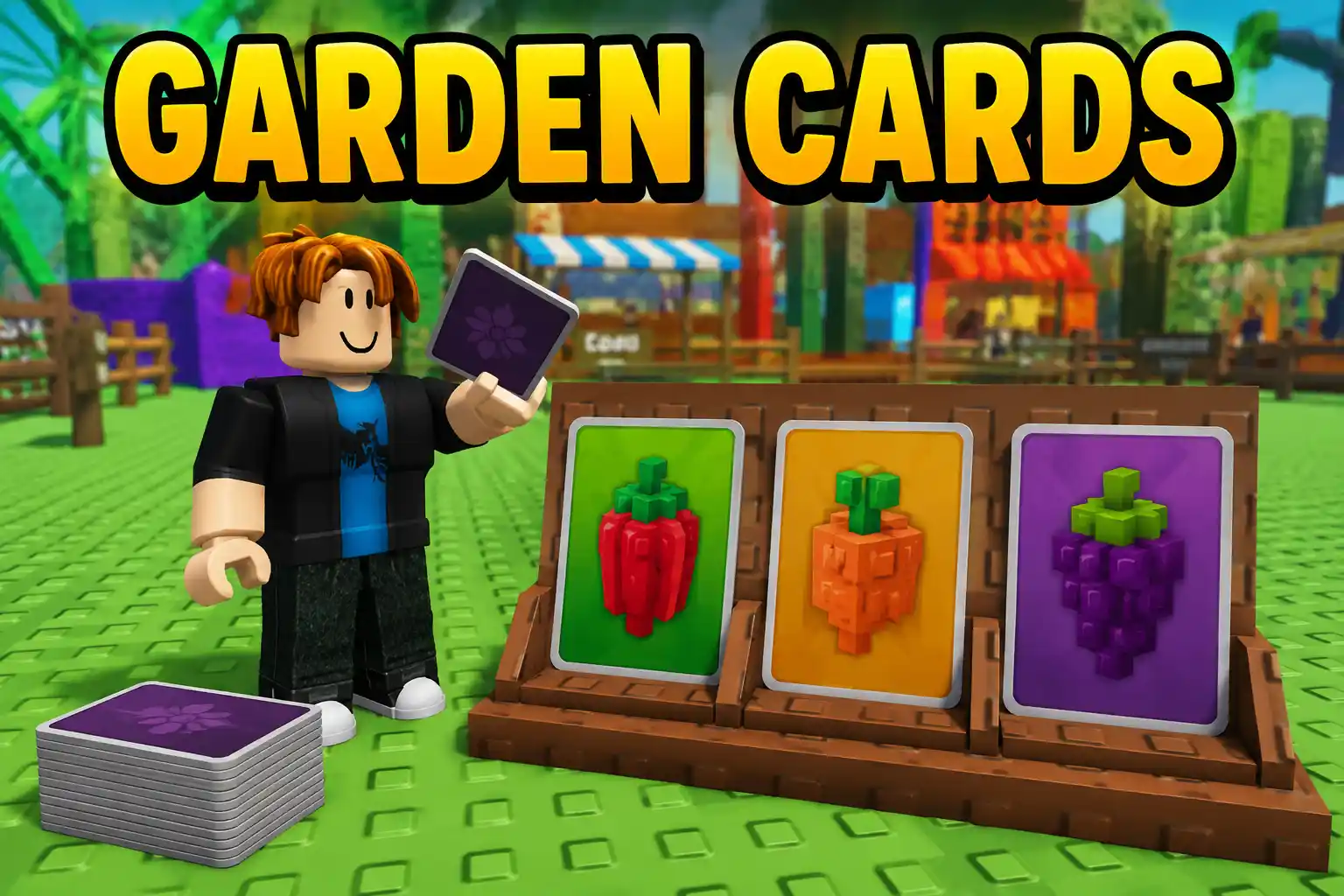

You open the shop menu expecting the usual seed restock, and instead there’s a five-card board staring back at you, one flipped face already glowing. That’s Garden Cards, the flip-and-reveal reward system that landed in Grow a Garden 2 on August 15, 2026 alongside a new NPC named Sam and a countdown that nobody has fully cracked yet. Within days, the feature had split the community into two camps: players who called it the best Robux value they’d seen all update cycle, and players who got baited into “just one more flip” and watched their balance disappear.
This guide breaks down exactly how the board works, which tiers and grand prizes are worth chasing, the real math behind the Robux pricing, and the reward-duplication bug that’s currently spreading across servers faster than the developers can patch it.
How the Five-Card Flip Board Actually Works
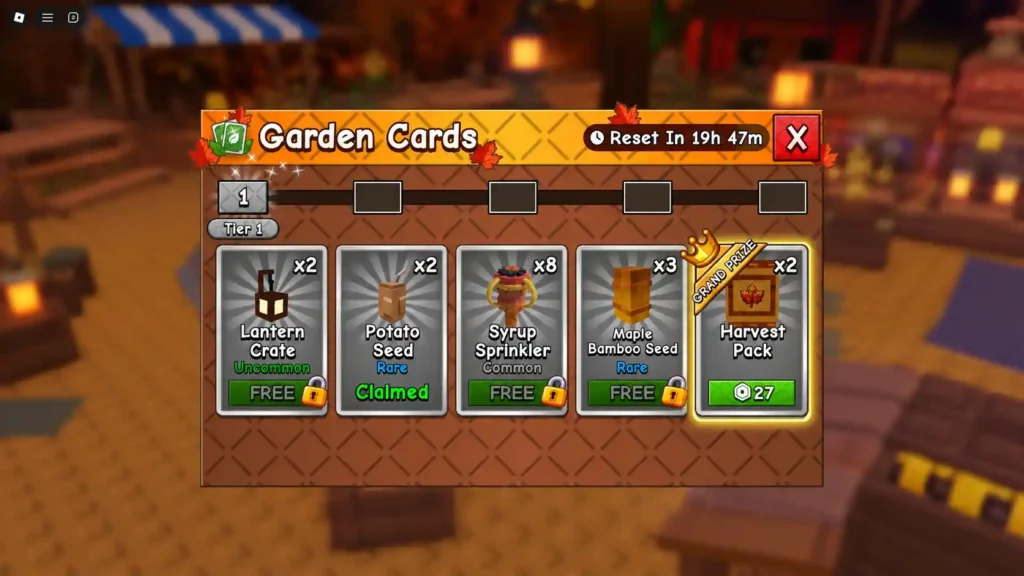
Garden Cards sits inside the Robux shop as a five-card flip board. The first flip on the board is always free — no Robux, no catch, just a straight claim. Every card after that costs Robux, and the price shown updates card by card depending on what’s underneath it.
The loop works like this: flip a card, see the reward, then decide whether to claim it or decline it. Claiming a paid card moves you toward completing the current tier; buy or claim all five cards in a tier and the board bumps you up to the next one, where the reward pool gets noticeably better — and noticeably pricier. Declining a card, on the other hand, can knock you back down a tier instead of just skipping the offer, which is the detail that catches a lot of players off guard mid-session.
Because the system reshuffles rewards and prices between offers, the same tier can serve up a genuinely good deal right next to a weak bundle at an inflated cost. Nothing about the board is fixed enough to memorize — every session means re-checking the math before tapping buy.
What Sam and the Countdown Timer Are Really Signaling
Garden Cards didn’t arrive alone. The same patch introduced Sam, a chef-hatted NPC the community immediately nicknamed “the Question Mark Man,” tucked away in Fall Harvest World past the main Maple crop fields near the tree line. Talking to him doesn’t trigger a normal quest — it just starts a cryptic countdown with no explanation of what happens when it hits zero.

Between Sam’s chef outfit and the sweet-themed assets data miners have already found sitting in the game files — a Muffin Man pet with a sell-value-boosting ability, a Sugar Bunny with passive movement buffs — the signs point strongly toward an upcoming Bake Sale event built around cooking and baked-goods crops. That context matters for how you should be spending right now: Garden Cards and the Bake Sale prep are two sides of the same update, and burning every Sheckle or Robux you have on card flips leaves you with nothing saved when the actual event opens.
Tier 1 Through Tier 5 Rewards, Broken Down
Each tier pulls from a different reward tier list, and the jump in both value and risk from Tier 1 to Tier 5 is steep. Here’s the breakdown based on what’s actually showing up on live boards right now:
| Tier | Typical Rewards | Robux Risk | Best Fit For |
| 1 | Basic seed packs, small bundles | Low | Free-to-play players |
| 2 | Better seeds, small premium items | Low–Medium | Light spenders |
| 3 | Mythic seed packs, standard eggs | Medium | Players chasing the current event |
| 4 | Exclusive chests, Magic Mail | High | Regular Robux users |
| 5 | Fall Rainbow Eggs, rare pets | Very High | Whale-tier spenders only |
Tier 5 is where things get genuinely confusing, because it holds the best and worst offers on the entire board at the same time. A bundle with a rare pet and a full egg stack might sit directly next to a three-egg pack priced at 700+ Robux — reaching Tier 5 is not, by itself, a signal that every card in it deserves your Robux.
Which Grand Prizes Are Worth Chasing (and Which Aren’t)
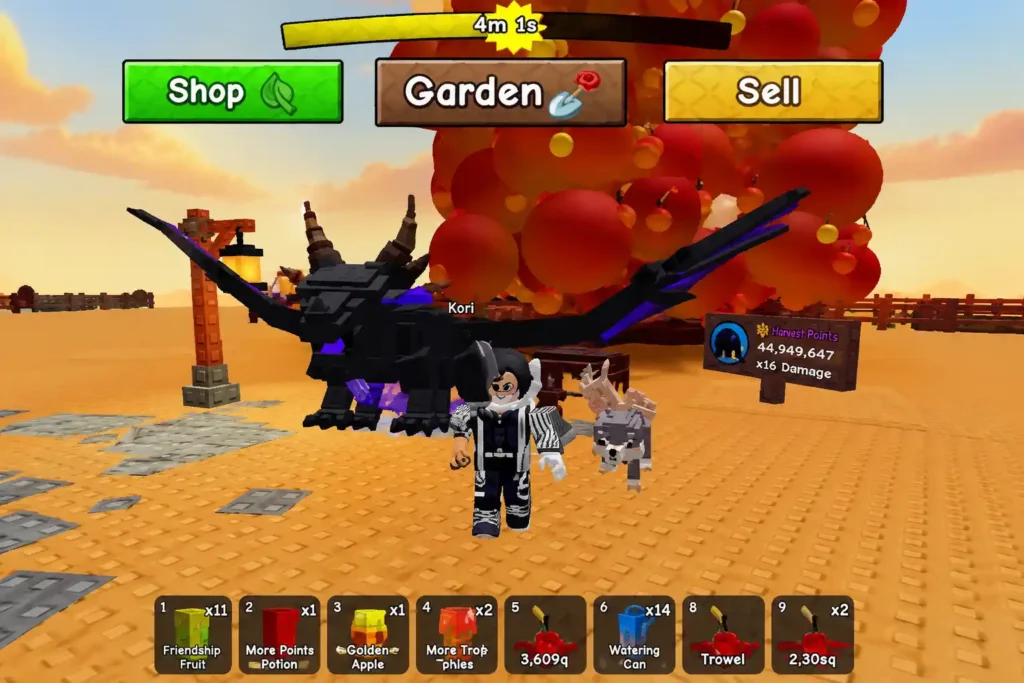
The Grand Prize pool spans Fall Rainbow Eggs, Exclusive Harvest Eggs, Fall Big Eggs, Fall Chests, Mythic and Super Seed Packs, rare Magic Mail, and high-tier pets like Rainbow Mega Foxes and Shadow Dragons. Players who’ve farmed toward a Shadow Dragon through Cornucopia Quest odds already know how rare that pet normally is — seeing it show up on a card board at all is part of why the feature caught on so fast.
Here’s the catch: the “Grand Prize” label is purely cosmetic. A Grand Prize offer containing three low-tier eggs at an inflated Robux cost is objectively worse than a smaller, cheaper offer sitting one card over. The label describes the reward category, not the value of the specific roll in front of you.
Worth grabbing when the price is close to shop value:
- Fall Rainbow Eggs and Fall Harvest/Big Eggs — consistently strong hatch odds
- Legendary or Super Magic Mail — needed to move items out of Fall Harvest World
- Rainbow Fox or Mega-tier pets — genuinely rare outside this system
Situational, buy only if cheap:
- Mythic or Super Seed Packs
- Exclusive chests without eggs attached
Skip almost every time:
- Small bundles priced above what the item shop already charges
- Basic seeds dressed up as a “premium” offer
The simplest gut-check: would you buy this exact item, at this exact Robux price, directly from the item shop? If the answer is no, decline the card.
The Real Robux Math Behind the Best Offers
Numbers make the decision easier than vibes do. Here’s how a few real card offers stack up against buying the same items straight from the shop:
| Deal | Shop Price | Garden Cards Price | Verdict |
| 50 premium eggs | 3,500 R$ | 1,300 R$ | Strong buy |
| 3 premium eggs | 149 R$ | 700+ R$ | Skip |
| 20 event eggs | 39 R$ | 599 R$ | Decent |
| 25 chests | 79 R$ | 1,300 R$ | Depends on contents |
The 50-egg bundle at 1,300 Robux instead of 3,500 is the clearest example of the system delivering on its promise — real savings, no asterisk. The three-egg pack at 700-plus Robux is the exact opposite: dressed up with Grand Prize styling, but mathematically worse than doing nothing. Comparing every offer against its shop price equivalent before spending is the single habit that separates players getting value from players getting baited.
The Seed and Harvest Pack Duplication Bug
Alongside the card system itself, a claim-state bug started spreading almost immediately. Some players have found that harvesting a seed pack or harvest-item reward, then declining the very next offer instead of accepting it, can leave the previous reward unlocked and re-claimable when the board drops them back a tier. Repeating the cycle lets players stockpile packs — including reports of Ghost Pepper seed packs — without spending Robux more than once, and the same behavior has reportedly worked in the standard Garden World too.
This is unmistakably a bug, not an intended mechanic, and it’s already visible enough that the developers are almost certainly tracking it. That matters for three reasons:
- Patch risk — Robux-adjacent bugs get fixed fast, since they directly affect the game’s monetization.
- Rollback risk — duplicated items are prime candidates for a reward rollback once the fix ships.
- Account risk — the game’s anti-cheat systems have been tightened recently, and heavy, repeated abuse of a known exploit is exactly the kind of pattern that gets accounts flagged or banned outright.
Building a farming strategy around a bug this visible is a short-term move with a real downside. If you do decide to test it, screenshot any Robux purchases you make around the same time, and hold off on trading anything you picked up through the exploit — values are going to shift the moment the patch lands, and a rollback could wipe the reward entirely.
Running Garden Cards With Zero Robux Spent
If you’re not putting real money into Grow a Garden 2, Garden Cards still has a role in your routine — it just has a hard ceiling. Claim the free first card every time it’s available, open whatever free packs come with it, and stop there. Don’t buy Robux specifically to chase a Tier 5 pull; the odds on the rarest pets are stacked heavily enough that a single purchase almost never pays off.
Where free-to-play players actually win is by stockpiling instead of spending — holding onto rare crops, seeds, and any Magic Mail you already own so you’re ready the moment the Bake Sale opens, rather than starting from zero after burning resources on card flips. The Leaves currency economy inside Fall Harvest World rewards exactly this kind of patience, and crops with strong sell multipliers only compound in value the longer you hold them.
A Spending Framework If You Are Buying Robux
For players who are putting Robux into the game, the fix isn’t avoiding Garden Cards entirely — it’s setting a hard limit before opening the menu at all, since the board is deliberately designed to make “just one more flip” feel reasonable every single time.
Redeeming any active Grow a Garden 2 codes before you spend is worth doing first, too — free seeds and gear lower how much Robux you actually need to reach a tier you’re happy stopping at.
A workable framework by budget:
- 0 Robux — free card only, no exceptions
- 100–500 Robux — only cheap offers that clearly beat shop price
- 500–1,500 Robux — egg bundles priced below their shop equivalent
- 1,500–5,000 Robux — Tier 5 offers, but only the ones that pass the shop-price test
- 5,000+ Robux — rare pet chasing, with strict discipline about walking away after a big win instead of trying to double it
The biggest mistake spenders make isn’t buying too little — it’s treating a Grand Prize label or a Tier 5 position as proof of value on its own. Neither one means anything without checking the actual reward against what it would cost you elsewhere.
Stockpiling for the Bake Sale While Cards Are Still Fresh
Sam’s countdown is the clearest hint available right now that a cooking-themed event is close, and the smartest move during the Garden Cards window is preparing for it rather than spending everything chasing card rewards. Hold onto high-yield crops, rare seeds like the Atlantic Giant Pumpkin, and any spare Magic Mail, since baking-focused events have historically rewarded players who show up with ingredients already stockpiled rather than players scrambling to farm from scratch on day one.
Crops with strong ongoing sell multipliers are worth protecting over one-time flashy rewards from the card board — a pet or item that boosts your sell value by even a modest percentage compounds every single harvest, while a card pull is a one-time hit no matter how good it looks. Players who’ve been keeping an eye on other Fall Harvest systems, like the Admin Party minigames or the pets ranked in the best pets for mutations and farming guide, already have a head start here — the same discipline that makes a pet worth farming applies directly to deciding which Garden Card offers deserve your Robux.
Garden Cards is a genuinely good system when you treat it the way its best offers deserve — checked against shop price, claimed when the math works, and ignored when it doesn’t. The players getting burned aren’t unlucky; they’re the ones skipping the comparison step because the board is built to make skipping it feel fine.
Frequently Asked Questions

Grow a Garden 2 Magic Mail Guide: Every Tier, Price & How to Use It (2026)
Read Guide
Cornucopia Quest Guide: Pilgrim, Rewards & Shadow Dragon Odds (2026)
Read Guide
Leaves Currency Guide: Earn, Spend & Manage the Fall Harvest Economy
Read Guide
Atlantic Giant Pumpkin: Price, Stock Chance & Is It Worth 600,000 Leaves?
Read Guide
Admin Party: Complete Guide to Minigames, Party Points & Chest Rewards
Read Guide