
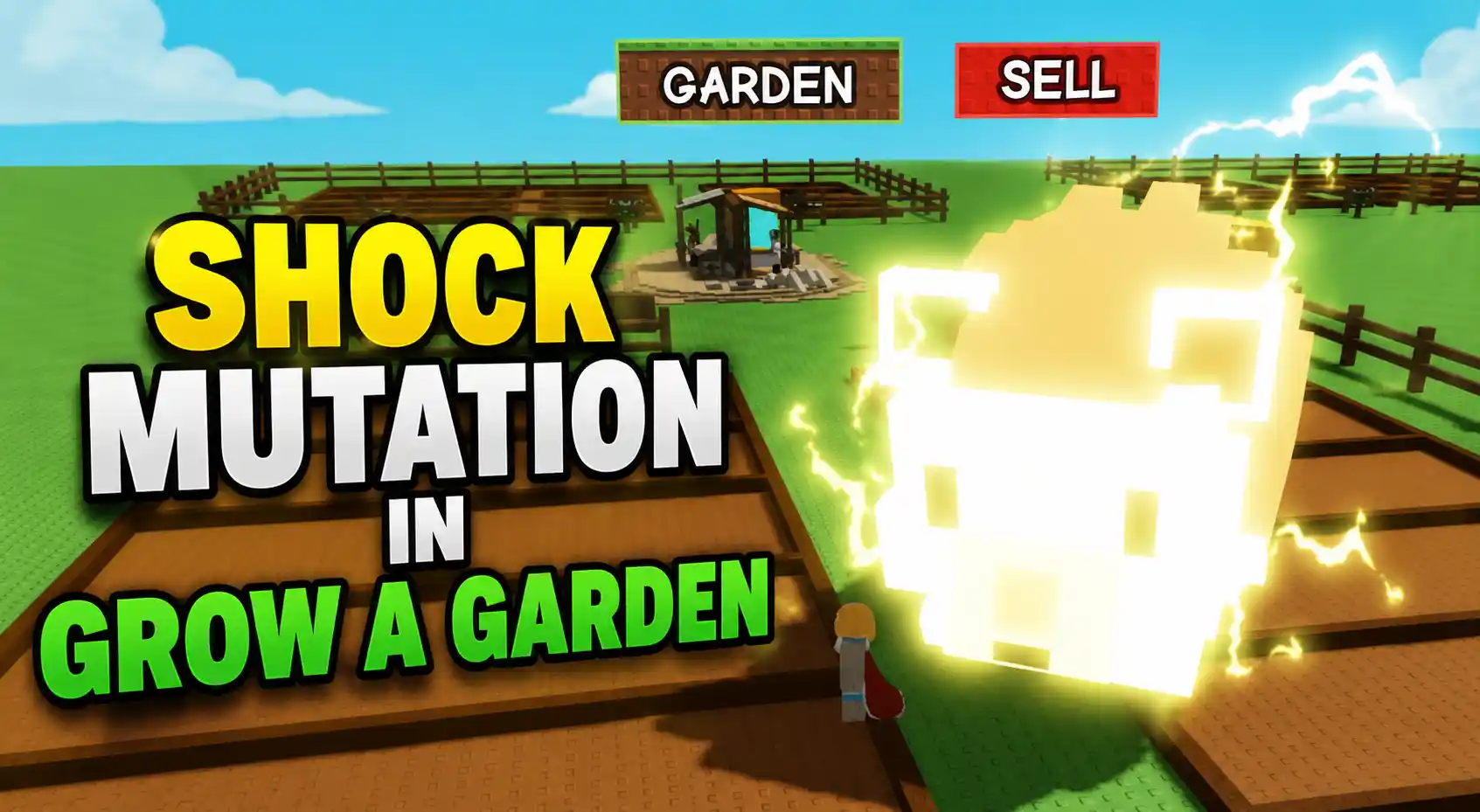

If you have ever watched a random crop in someone else’s plot suddenly flash bright blue and sell for a hundred times its normal price, you already know why the Shocked mutation is one of the most chased effects in Grow a Garden. It is not the rarest visual in the game, but it is one of the few mutations that turns an ordinary harvest into a genuine Sheckles windfall, and unlike a lot of Roblox farming mechanics, there are actually confirmed, repeatable ways to land it instead of just hoping the weather cooperates.
This guide breaks down every method that currently works, the real crafting recipe behind the Shocked Mutation Spray, how the multiplier actually stacks with other effects (most guides get this part wrong), and which crops are worth the investment. Every number below has been cross-checked against current patch data and the community wiki, so you are not farming off outdated 50x figures from an old update.
What the Shocked Mutation Actually Does
The Shocked mutation is a crop value multiplier that applies a flat 100x bonus to a crop’s base Sheckle price the moment it is triggered. Visually, an affected fruit takes on an electric-blue glow with small spark particles jumping off its surface, which makes it easy to spot in a crowded garden even from a distance. A crop that would normally sell for 20,000 Sheckles jumps to 2,000,000 Sheckles once Shocked lands on it, which is why it consistently ranks near the top of every crop mutation value list players put together.
Unlike cosmetic-only effects, the Shocked mutation is purely an economic modifier. It does not change how a plant grows or how long it takes to mature, and it can be combined with other mutations on the same fruit, which is where most of the real profit potential comes from.
Four Confirmed Ways to Get the Shocked Mutation
There is no single “best” method here — it depends on whether you would rather gamble for free or pay a guaranteed cost. Below are the four ways currently confirmed to work.
1. Wait Out a Thunderstorm (Free, But Random)
The original and still most common source of the Shocked mutation is the Thunderstorm weather event. When a storm rolls in, the sky darkens to a heavy grey, a server-wide notification appears, and random lightning bolts begin striking crops across every active garden. Any fruit struck by lightning has a chance to receive either the Shocked mutation or its weaker cousin, Static, and crops also tend to grow noticeably faster while the storm is active.

The catch is that you have zero control over which plant gets hit, and Thunderstorms are not a guaranteed daily occurrence — they are one of several rotating weather events the game cycles through. If you want a full breakdown of how often each weather type appears and which ones are worth farming, our weather guide covers the full rotation and timing.
2. Place a Lightning Rod to Improve Your Odds
The Lightning Rod is a piece of gear available in the Gear Shop that visibly increases the chance of a lightning strike landing on crops planted near it during an active storm. It will not guarantee a hit, but placing one in the middle of your highest-value crops meaningfully shortens the odds compared to relying on pure random placement.
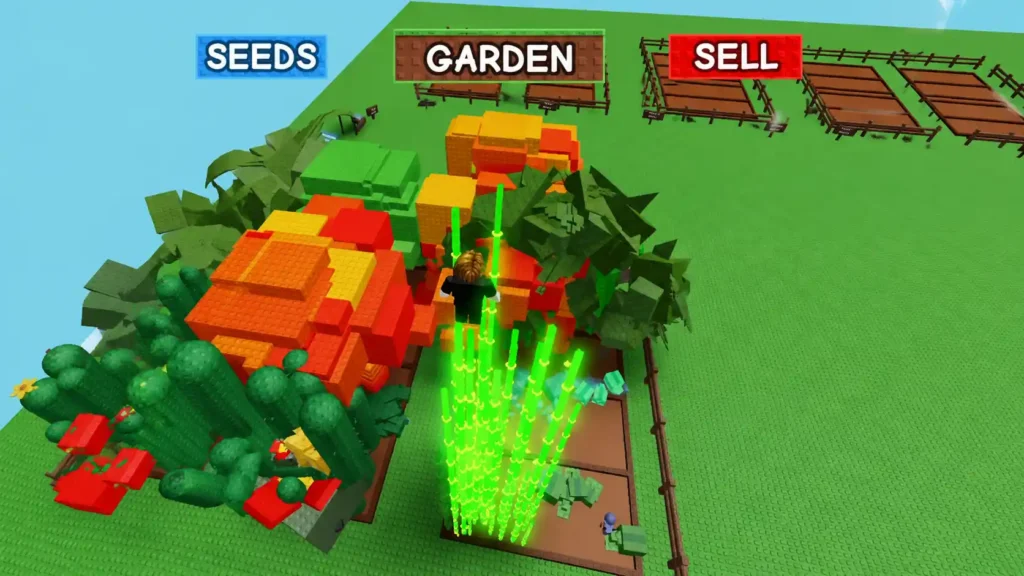
Because the Gear Shop’s stock refreshes only every few minutes, Lightning Rods are not always available to buy on demand, so it is worth checking back regularly rather than waiting until a storm has already started. For a full ranking of which tools are worth grabbing first, check our gear tier list.
3. Craft the Shocked Mutation Spray for a Guaranteed Hit
If you would rather skip the weather RNG entirely, the Shocked Mutation Spray is a craftable, single-use item that applies the mutation instantly to any crop you choose. This is the only fully reliable method in the game right now, and it is what most late-game players use once they have a genuinely valuable crop worth protecting from bad luck.
Here is exactly what it takes to make one:
| Requirement | Amount | Where to Get It |
| Cleaning Spray | 1 | Purchased from the Gear Shop (roughly 15,000,000 Sheckles) |
| Lightning Rod | 1 | Purchased from the Gear Shop |
| Honey | 250 | Produced at the Honey Compressor from Pollinated crops |
| Crafting Time | 30 minutes | Or skip instantly for 199 Robux |
Once you have gathered the ingredients, head to the Gear Crafting Station near the center of the map, interact with it, select the Shocked Mutation Spray from the recipe list, and submit all three items. After the timer finishes, collect the finished spray, equip it from your inventory, and click directly on the crop you want to mutate. If the crop is not eligible, the game will simply prompt you to pick a different target instead of wasting the spray.
Collecting 250 Honey is genuinely the slowest part of this whole process. Each Honey Compressor run typically yields somewhere between 6 and 10 Honey depending on how many Pollinated crops you feed it, so most players need a couple dozen runs to hit the total. Keeping a Bee-type pet active in your garden is the fastest way to keep crops Pollinated between rain cycles, and our best pet combos guide has several loadouts built specifically around Honey production.
4. Use a Shocked-Mutated Pet or the Raiju
Pets themselves can carry mutations, and a pet with the Shocked pet mutation has a small passive chance — roughly a 25% chance every 55 seconds during an active Thunderstorm — to attract lightning and apply the Shocked mutation to nearby crops automatically, effectively acting as a second Lightning Rod. This mutation only shows up on pets after they have been processed through the Pet Mutation Machine, and it is not guaranteed.
The Raiju, a Divine-rarity pet from the Zen Shop, is a slightly different case. Its passive periodically consumes an existing Shocked fruit for a small value bonus and then releases a chain lightning burst that mostly applies the weaker Static mutation to nearby crops — but during an active Thunderstorm, that same chain lightning has roughly a 20% chance of applying Shocked instead. It is a fun bonus for storm-focused setups, but it is not a method to rely on by itself.
How Shocked Actually Stacks With Other Mutations
This is where a lot of guides quietly get the math wrong. Mutation multipliers in Grow a Garden do not stack multiplicatively — they stack additively, based on how much each one adds above the base ×1 value. That means Shocked (×100) combined with Frozen (×10) produces a combined ×109 multiplier, not ×1,000. The formula is simply: add every individual mutation bonus together, then apply that combined number once to the crop’s base weight-adjusted price.

This still makes stacking extremely worthwhile — a crop carrying Shocked, Gold, and Wet mutations at once can realistically reach several-hundred-times its base value — but it is a very different outcome than the “multiply everything together” math that circulates in a lot of community spreadsheets. If you are planning which mutations to chase together, our crops tier list and profit guide walks through realistic stacked values crop by crop.
Static vs. Shocked: What’s the Difference?
Static is a separate, weaker electric-themed mutation, applying roughly an ×8 multiplier compared to Shocked’s ×100. It is produced almost exclusively by the Raiju pet’s chain lightning ability rather than directly from Thunderstorm strikes, and — unlike some of the game’s other mutually exclusive effect pairs — Static is able to sit on the same fruit as Shocked at once. If you see a crop described as “Shocked Static,” that is a real, legal combination, not a mislabel.

Which Crops Are Worth Spending a Spray On
Because the Shocked Mutation Spray consumes real Sheckles and roughly half an hour of crafting time (or Robux) for a single use, it is not worth spending on a low-value crop. The multiplier is flat regardless of what it is applied to, so the actual payout scales entirely with the crop’s base Sheckle value. Save your spray for whatever your single highest-value harvest-ready plant is at the time, ideally one that already carries a size bonus or a secondary mutation like Gold or Wet, since the additive stacking described above means every extra mutation adds real value on top. Our ultimate money-making guide has a broader breakdown of which crops consistently give the best return per Sheckle invested if you are still deciding what to grow.
Common Mistakes That Waste a Shocked Attempt
- Applying the spray to a crop that already has a Shocked mutation. The game will not let this go through, and you will need to select a different target on the spot.
- Crafting the spray before you have a crop worth using it on. Since it is single-use, it is more efficient to grow your target crop first and craft the spray once you know exactly what you are aiming it at.
- Ignoring the Gear Shop’s stock rotation. Because Cleaning Spray and Lightning Rod stock refreshes every few minutes and is not guaranteed to be available, checking back regularly saves a lot of wasted time compared to farming Honey first and then discovering neither ingredient is in stock.
- Assuming mutations multiply together. Planning your garden around a multiplicative stacking myth will lead to disappointing sell prices — plan around the real additive formula instead.
Is Farming the Shocked Mutation Worth It?
For most players past the early game, yes. A 100x multiplier is large enough that even a single successful application on a mid-value crop can fund several rounds of seed purchases, and because the Shocked Mutation Spray removes the randomness entirely, it is one of the few high-value mutations you can plan around with certainty rather than luck. The main cost is time — gathering 250 Honey is a genuine grind — so it tends to make the most sense once your garden already has steady Pollinated crop production running in the background rather than as a first-week goal.
If your garden’s income is still inconsistent, it is usually worth prioritizing steady Sheckle generation and a wider seed rotation before committing resources to a single guaranteed Shocked application. Our best seeds guide is a good starting point for building that foundation before you start chasing high-tier mutations like this one.
.
Frequently Asked Questions

Grow a Garden Weather Guide 2026 – All Weather Events, Mutations & Best Farming Strategies
Read Guide
Grow a Garden Gear Tier List 2026 (All Gear Ranked & Best Tools Guide)
Read Guide
Grow a Garden Crops Tier List and Profit Guide 2026
Read Guide
Grow a Garden Pet Mutation Machine: Cost, Location, Drop Rates & Everything Confirmed So Far (2026)
Read Guide
Best Pet Combos in Grow a Garden 2026 (Ranked by EXP, Money & Mutations)
Read Guide