
Every experienced Grow a Garden 2 player eventually hits the same wall: Sheckles are piling up, the garden is full, and it’s still not clear which pets are worth the price tag versus which ones just look impressive standing next to your crops. Pets aren’t cosmetic in GAG2 — they’re the single biggest multiplier on how fast your mutation chance climbs and how quickly your plants finish growing, and picking the wrong ones can waste hundreds of thousands of Sheckles or Leaves for almost no return.
This guide ranks every pet that actually matters for mutation farming and growth speed, using confirmed abilities, prices, and spawn chances, so you know exactly where to spend first.
How Pets Actually Affect Mutation Chances and Growth Speed in GAG2
Two separate systems are at play, and mixing them up is the most common reason players build the wrong loadout. Plant mutations — Gold, Rainbow, and the rarer weather-locked ones like Electric or Eclipsed — are applied to your crops and multiply their sell value anywhere from 10x to 100x. Pets don’t create new mutation types; instead, a small handful of them double the chance that a Gold or Rainbow roll happens in the first place. Separately, growth-speed pets like Deer and Butterfly shrink the time between planting and harvest, which doesn’t touch mutation odds at all but does mean more harvest cycles per hour, and therefore more chances for that 1% base mutation roll to hit naturally.
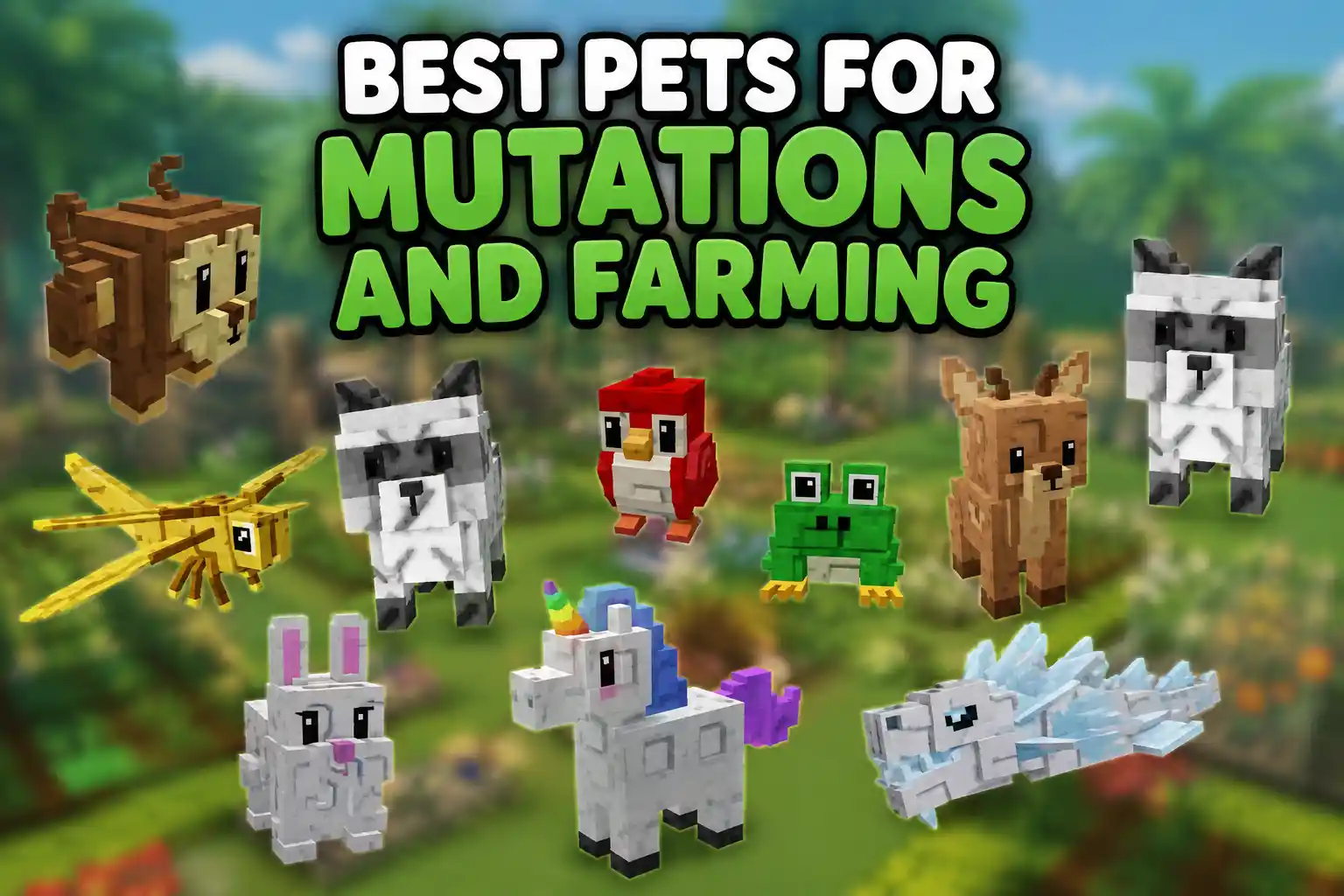
The pets worth chasing fall into three lanes: mutation-chance pets (Golden Dragonfly, Unicorn, Shadow Dragon, Kitsune), growth-speed pets (Deer, Butterfly, Firefly), and defensive pets that protect the mutated crops you’ve already grown from being stolen before you can sell them. A serious farming setup usually needs at least one from each lane.
Golden Dragonfly vs Unicorn: Which Mutation Pet Earns Back Its Price Faster
These two are the backbone of any mutation-focused garden, and they solve different problems. Golden Dragonfly costs 3,000,000 Sheckles, has a 0.6% map spawn chance, and doubles the chance for plants and fruit to turn Gold, a mutation worth a 10x sell multiplier. Unicorn costs 4,000,000 Sheckles, spawns at 0.71%, and doubles the chance for a Rainbow roll, which carries a much heavier 30x multiplier.
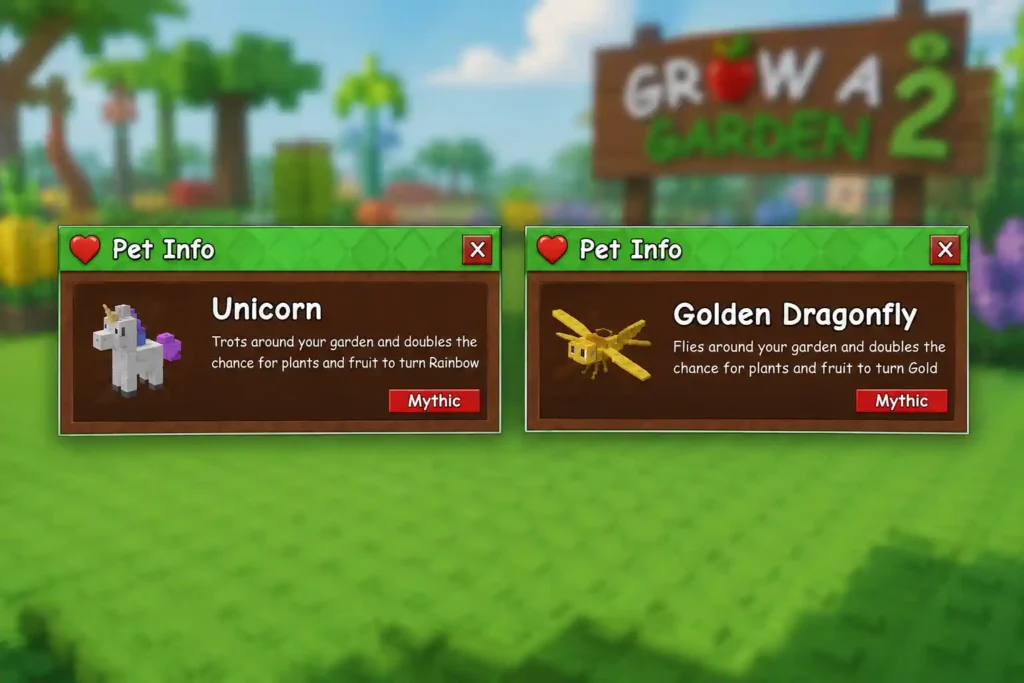
Because Gold is the more common of the two mutations to begin with, Golden Dragonfly pays for itself faster on raw crop volume — it’s the better first purchase for a player still building capital. Unicorn is the stronger long-term hold once your garden can support waiting for the rarer, higher-value hits, since a single Rainbow crop is worth roughly three times what a Gold one sells for. Importantly, the two pets stack independently — Golden Dragonfly only touches Gold odds and Unicorn only touches Rainbow odds, so running both at once doesn’t create diminishing returns; it just widens the net.
| Pet | Price | Spawn chance | Mutation boosted | Multiplier of mutation | Rainbow/Big/Mega ability scaling |
| Golden Dragonfly | 3,000,000 Sheckles | 0.6% | Gold | 10x | x2 → x3 (Big) → x4 (Mega) chance |
| Unicorn | 4,000,000 Sheckles | 0.71% | Rainbow | 30x | x2 → x3 (Big) → x4 (Mega) chance |
Deer, Butterfly, and Firefly — Stacking Growth-Speed Pets for Faster Harvest Cycles
Growth-speed pets don’t touch mutation math directly, but they compound with everything above by simply giving you more harvests to roll the dice on. Deer is the standout here: 50,000 Sheckles, a very reachable 4.29% spawn chance, and a flat 10% plant growth speed boost that scales up to 30% on a Mega roll. It’s usually the first pet any new farmer buys because the price-to-impact ratio is unmatched.
Butterfly works differently — instead of boosting your own garden, it accelerates everyone’s plants nearby, including yours, at a smaller 3% base rate. At 1,000,000 Sheckles it’s a mid-game pickup rather than a starter buy, but it’s cheap enough to slot in once Deer is already secured. Firefly, at 3,000,000 Sheckles, doesn’t speed up growth so much as increase the starting size of newly planted crops by 1%, which matters more for players chasing base-value crops than for pure mutation hunters, but it’s a reasonable third pick once the core two mutation pets are locked in.
Running Deer alongside either Golden Dragonfly or Unicorn is the single most efficient early-to-mid loadout in the game: faster cycles feeding a doubled mutation chance.
Shadow Dragon and the Veil Mutation: Is 30,000,000 Leaves Worth It
Shadow Dragon is the headline pet from the Fall Harvest World update, and its price alone — 30,000,000 Leaves, with a base map spawn chance of just 0.00464% — puts it out of reach for most players outside of trading or serious grinding. Its ability applies the Veil mutation to newly planted seeds at a 5% chance per plant. Veil is currently one of the stronger environmental mutations, and unlike weather-locked options such as Bloodlit or Starstruck, it doesn’t depend on random server events at all — it’s tied directly to owning the pet.
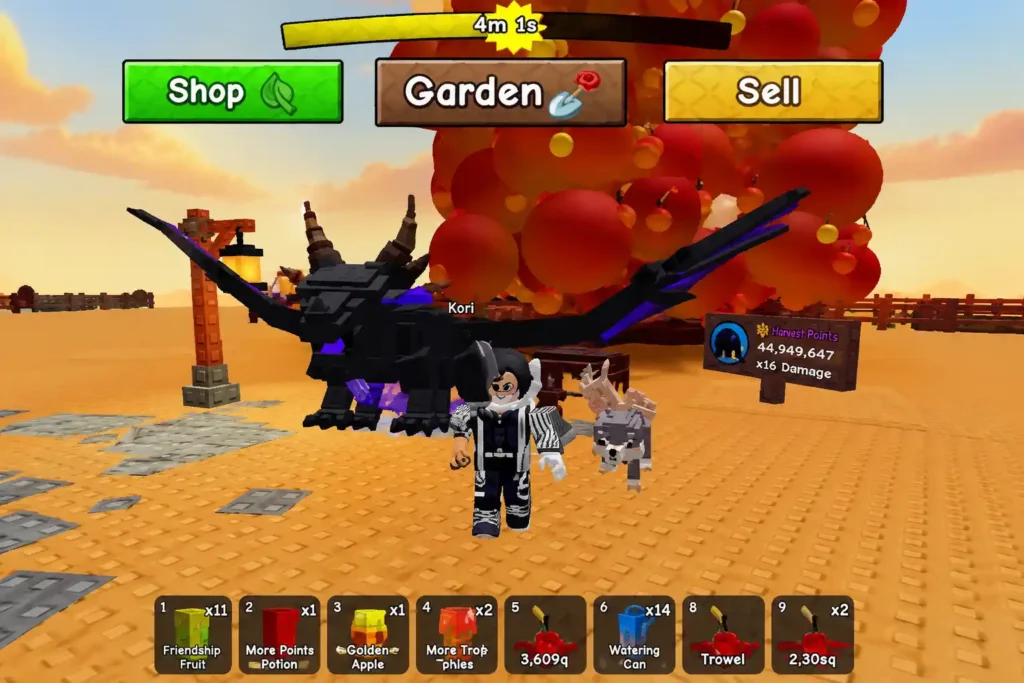
That consistency is the appeal: a 5% proc rate sounds low, but applied across dozens of plantings per session, it becomes a steady secondary income stream layered on top of whatever your Golden Dragonfly or Unicorn is already doing. For players still working through early Fall Harvest World progression, it’s not a priority purchase. For players who already have a stable Leaves income and are looking for the next real upgrade, it’s currently one of the best Leaves sinks in the game.
Kitsune and the Chakra Mutation Loop (Secret-Tier Endgame Pet)
Kitsune sits alone in the Secret rarity tier, and for good reason — its hatch rate from both the Fall Egg and Fall Chest sits at just 0.1%. Its ability sneaks out at night to steal fruit from empty gardens and applies the Chakra mutation, a 60x multiplier, directly to whatever it brings back. That makes Kitsune less of a passive-income pet and more of an active loop: it rewards players who are also running a stealing-focused setup, since the pet is effectively generating high-value mutated fruit for free every night cycle.
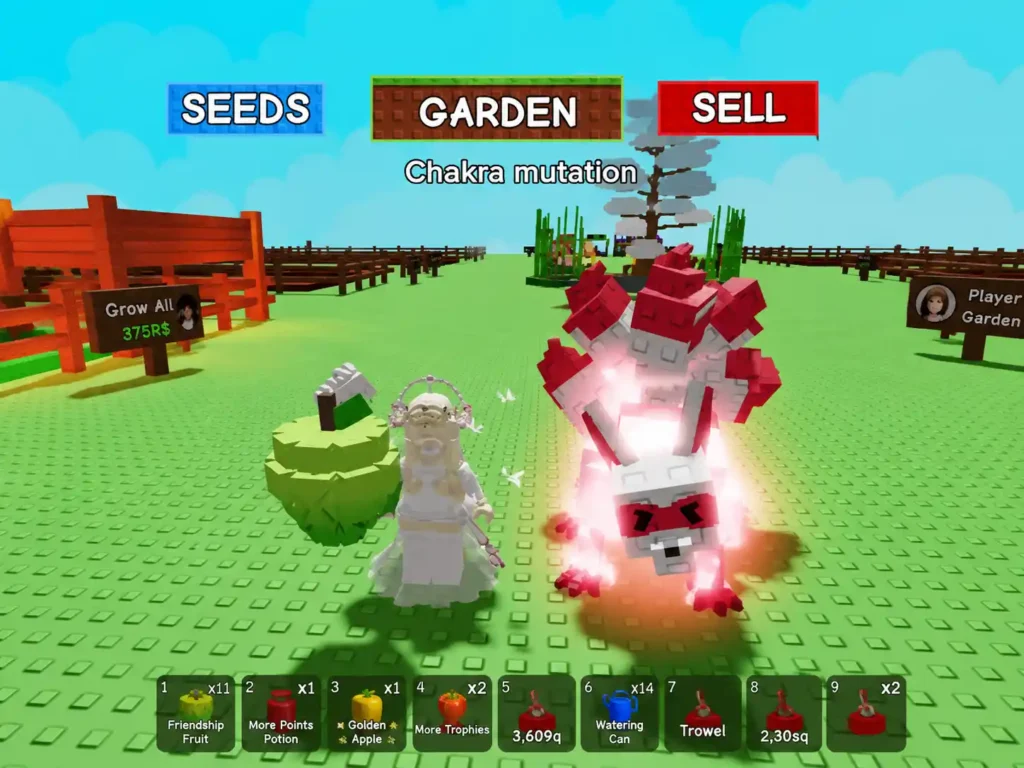
Because of how rare it is to hatch, most players will encounter Kitsune through trading rather than eggs. It’s worth prioritizing over almost anything else on this list if you can get one, but it shouldn’t be the pet a newer player is saving up for — Golden Dragonfly, Unicorn, and Deer will do more for an average garden’s bottom line long before Kitsune becomes realistic.
Big, Mega, and Rainbow Variants — How Much They Really Boost Mutation Odds
Every pet in Grow a Garden 2 can roll with one of two independent bonus systems: a size variant (Big or Mega) and a Rainbow variant, and because these roll separately when a pet hatches, a single pet can carry both at once. Size variants are the bigger deal for mutation-chance pets specifically — a Big Golden Dragonfly or Unicorn multiplies the base ability by roughly 3x instead of 2x, and a Mega version pushes that to 4x. The Rainbow variant adds a smaller, flat 1.25x on top of whatever size variant is already applied.
| Pet | Normal | Big | Mega |
| Golden Dragonfly (Gold chance) | x2 | x3 | x4 |
| Unicorn (Rainbow chance) | x2 | x3 | x4 |
| Deer (growth speed) | +10% | +20% | +30% |
The catch is obtaining them. Normal eggs can occasionally roll a mutated pet, but the guaranteed route is through Big Eggs and Rainbow Eggs, both of which come from weekly guild rewards rather than the shop — a guild needs to place in roughly the top 250 for Big Eggs and top 25 for Rainbow Eggs. Mega Eggs currently aren’t available through any guild reward tier, which makes a Mega pet one of the rarest cosmetic-and-functional upgrades in the game right now.
Best Pet Loadout for New Farmers on a Sheckles Budget
Players just starting out don’t need to chase Shadow Dragon or Kitsune to see real progress. A realistic early loadout looks like Bunny (20,000 Sheckles, +5 walk speed) for faster harvest-selling trips, Owl (25,000 Sheckles) for the night-vision and rare-spawn alert, and Deer (50,000 Sheckles) for the growth-speed boost that compounds everything else. Combined, these three cost well under 100,000 Sheckles and cover mobility, awareness, and the single best early growth multiplier in the game.
Once that base is comfortable, Golden Dragonfly at 3,000,000 Sheckles should be the very next major purchase — it’s the cheapest way into real mutation income, and it clears the path toward Unicorn once your garden’s output has scaled up enough to justify the heavier 4,000,000 Sheckle price tag.
Best Five-Slot Loadout for Maxing Out Mutation Value
For players with unlocked pet slots and a garden that can absorb the investment, the strongest combination currently available pairs Golden Dragonfly and Unicorn for stacked, independent mutation-chance boosts, Deer to keep harvest cycles fast enough to actually make use of those odds, Shadow Dragon for a steady Veil income that doesn’t rely on weather RNG, and either Bee or Bald Eagle to protect the higher-value crops this setup produces from being stolen before you can sell them. This loadout isn’t cheap — between Sheckles and Leaves it represents tens of millions of currency — but it’s currently the closest thing to a complete mutation-farming build in Grow a Garden 2.
Defensive Pets Worth Running Alongside a Mutation Farm
Stacking mutation pets means your garden is worth stealing from, and that’s where defensive pets earn their slot. Bee (1,000,000 Sheckles, 2.38% spawn chance) swarms intruders and is one of the cheapest ways to discourage casual thieves early on. Bald Eagle (5,000,000 Sheckles) physically removes intruders by flying them out of the garden, which is a harder deterrent than Bee’s swarm but comes at a steeper price. For guild players, Ice Serpent and Black Dragon are the top-tier defensive options — both are exclusively guild leaderboard rewards rather than map spawns, requiring a top-100 or top-25 guild placement respectively, and both apply a hard crowd-control effect (freezing or setting fire to intruders) rather than just shoving them out.
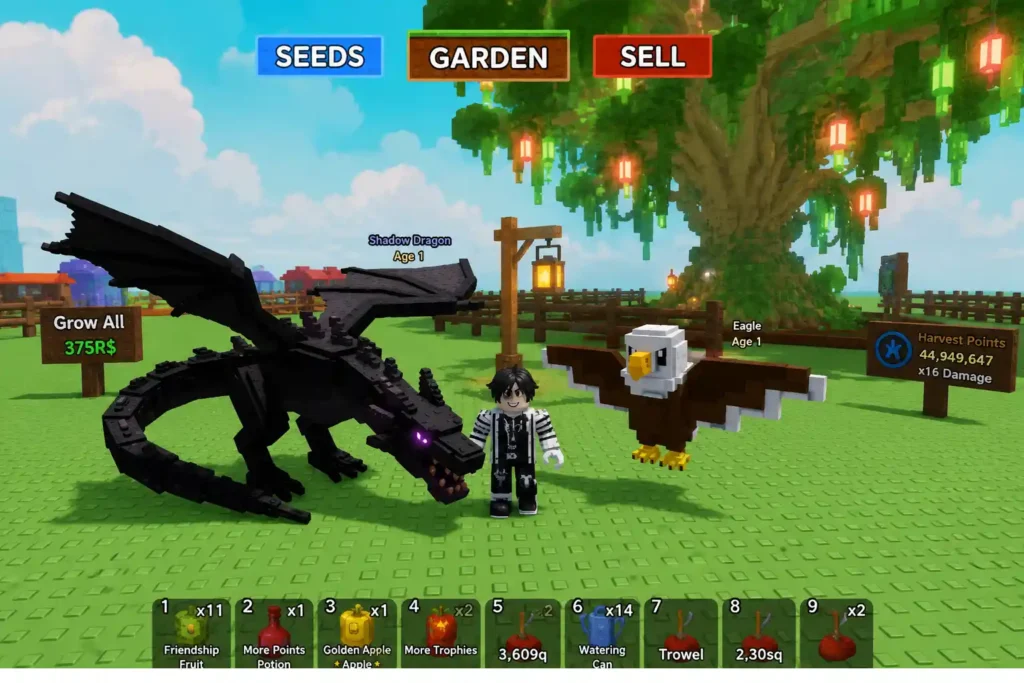
None of these pets touch mutation odds directly, but running one alongside a mutation-heavy loadout protects the investment those other pets are generating.
Where Each Pet Actually Comes From (Map Spawns vs Guild Rewards vs Fall Eggs)
Most pets on this list, including every mutation-chance pet except Kitsune and Shadow Dragon, spawn directly on the map for a limited time and can be bought with Sheckles or Leaves once you reach them before another player does. A smaller group is locked behind other systems entirely: Ice Serpent and Black Dragon are pure guild leaderboard rewards with no map-spawn route at all, while Kitsune, Scarecrow, Red Panda, and Jackalope only come from Fall Eggs and Fall Chests tied to Fall Harvest World. Knowing which bucket a pet falls into matters for planning — there’s no point grinding map spawns for a pet that can only come from a guild reward tier, and vice versa.
Pets That Look Good on Paper But Waste a Slot
Not every pet with a flashy price tag earns its place in a mutation-focused build. Monkey, at 1,000,000 Sheckles, only occasionally picks ripe fruit and hands it to you — convenient, but not worth a full slot when the same money buys real mutation upside elsewhere. Owl is genuinely useful early for the rare-spawn alert, but its buff barely moves income once a garden matures, so it’s usually worth swapping out by the time other slots open up. Robin is the one to watch out for specifically: it eats ripe fruit from your own garden as part of its seed-drop ability, and because rarer fruit has a lower drop chance, it’s possible to lose crops you meant to sell without getting a seed back in return.
None of these are bad pets to own generally — they’re just poor picks for a loadout built specifically around mutation farming and growth speed.
Frequently Asked Questions

Grow a Garden 2 Pets Guide (Complete 2026 Guide)
Read Guide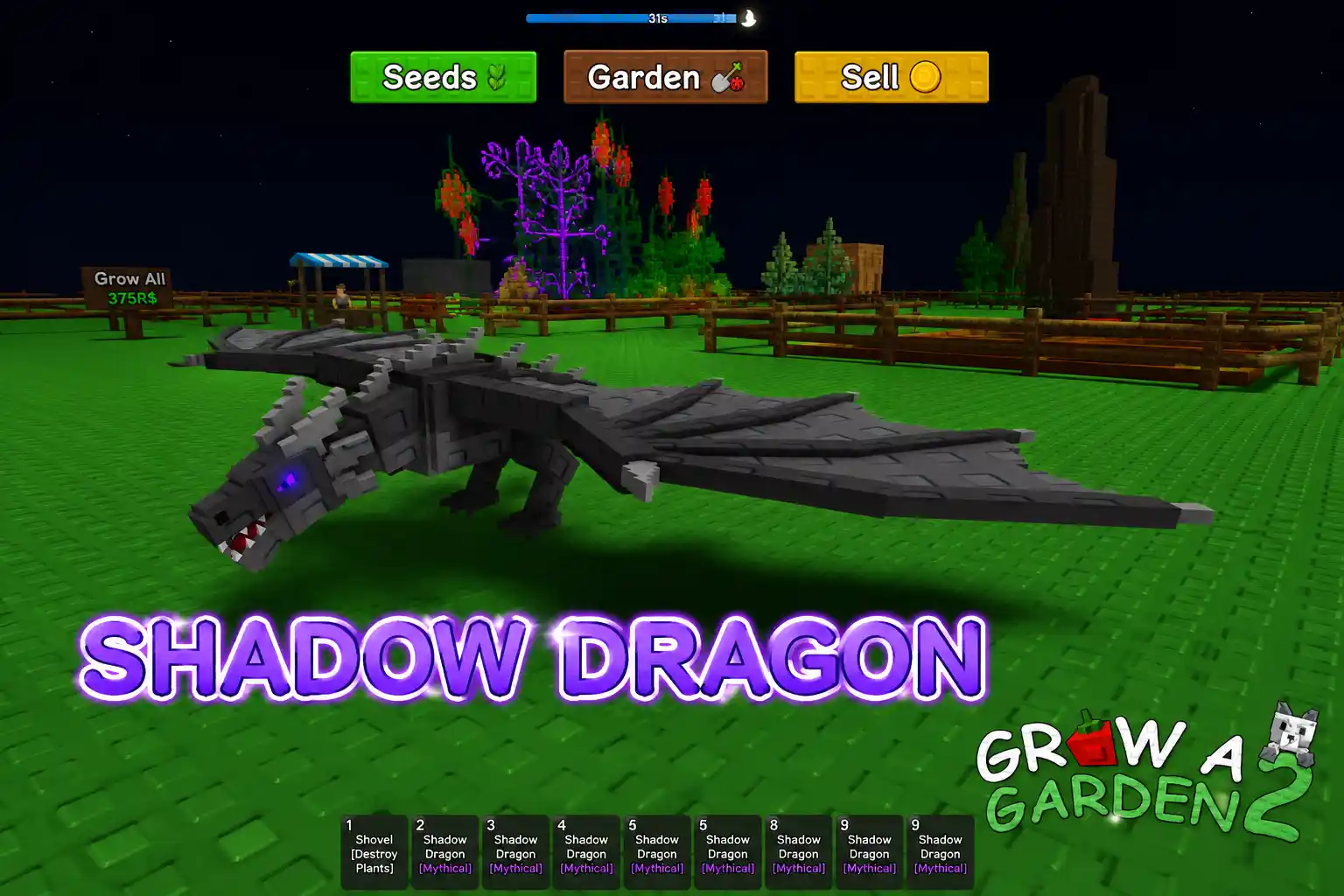
Grow a Garden 2 Shadow Dragon: Ability, Veil Mutation & Everything Confirmed So Far
Read Guide
Grow a Garden 2 Ice Serpent: Ability, How to Get It & Is It Worth the Grind?
Read Guide
Grow a Garden 2 Bald Eagle Pet: Ability, Price, Spawn Chance & Complete Defense Guide
Read Guide
Grow a Garden 2 Butterfly Pet: Ability, Price, Spawn Chance & Everything You Need to Know
Read Guide