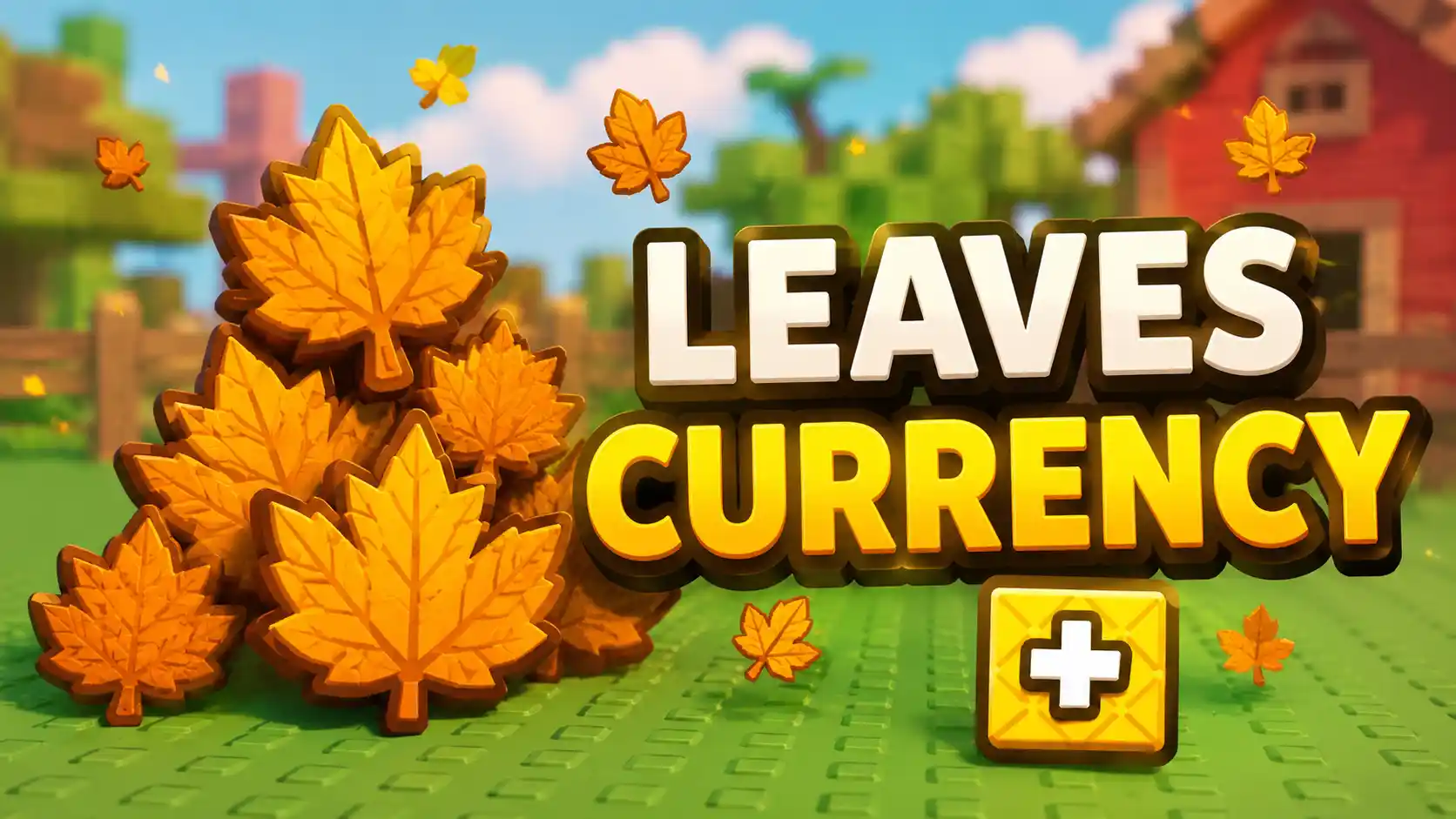

Log into Grow a Garden 2 right now and talk to Explorer Ethan, and the game hands you something it has never asked of you before: a second wallet. Leaves are the standalone currency running the entire Fall Harvest World economy, and if you’re still thinking of them as “event Sheckles with a different name,” that assumption is going to cost you real progress before the season closes.
This guide walks through exactly what Leaves are, every confirmed way to earn them, everything they can buy, and how to avoid watching a stack of hard-farmed currency go to waste when the Fall Harvest World countdown hits zero.
What Is the Leaves Currency in Grow a Garden 2?
Leaves is the dedicated in-game currency that powers Fall Harvest World, the standalone event map that went live on August 2, 2026. It isn’t a temporary multiplier on your existing Sheckles balance, and it isn’t a cosmetic points system sitting on top of the main game — it’s a fully separate economic layer, with its own shop, its own prices, and its own earning loop that has nothing to do with how Sheckles work back in Garden Valley.
Everything about Leaves is scoped to the Fall Harvest World you enter through Explorer Ethan near the center of Garden Valley. The moment you teleport across, your Sheckles balance becomes irrelevant, and every seed, pet, and gear purchase from that point forward runs entirely on the number of Leaves sitting in your Fall Harvest inventory.
Why Leaves Runs on a Completely Separate Economy From Sheckles
The core design choice behind Leaves is isolation. Sheckles simply don’t function inside Fall Harvest World — you can’t spend them at the Fall Harvest Seed Shop or the Gear Shop, and there’s no exchange rate that converts one currency into the other in either direction. That separation is deliberate, and it exists for a specific reason: it lets Splitting Point Studios run a limited-time, high-stakes economy without disturbing the balance of the permanent game underneath it.
Practically, that means two things worth internalizing before you farm a single crop:
- Any Sheckle-based purchase you’re planning — gear, sprinklers, and especially Magic Mail — needs to happen in Garden Valley before you cross over, since Sheckles are just a locked number once you’re standing inside Fall Harvest World.
- Every Leaf you earn only has value inside the event. There’s no confirmed conversion path back into Sheckles once Fall Harvest World closes, so sitting on a large unspent balance near the end of the event is effectively burning currency for no reason.
How to Start Earning Leaves: Getting Into Fall Harvest World
Access runs through a single NPC. Explorer Ethan stands at the Explorer Stand near the center of Garden Valley, and talking to him opens an Event Worlds menu that teleports you into Fall Harvest World with one click — no rejoining the server, no separate download. There’s no level requirement and no item gate; if you can find him, you’re in.

Once inside, you start from a completely clean slate: an empty backpack, a fresh garden plot, and zero Leaves. None of your Garden Valley pets, gear, or seed pack progress carries over, which is exactly why the earning strategies below matter from your very first minute in the event.
The Confirmed Ways to Earn Leaves Inside Fall Harvest World
Selling Maple Crops at the Fall Sell Stand
The primary income loop is identical in spirit to how Sheckles work back home: plant a Maple crop, let it mature, and sell it at the Fall Sell Stand for Leaves. Every crop pulled from the Fall Harvest Seed Shop pays out in Leaves rather than Sheckles, which is why your farming rotation inside the event needs to be treated as its own economy rather than an extension of your Garden Valley plot.
Because there’s no starting capital when you first arrive, the realistic opening move is rotating fast-growing Common and Uncommon Maple crops — Maple Carrot, Maple Strawberry, and Maple Blueberry are the standard low-cost entry points — until you’ve banked enough Leaves to start scaling toward rarer tiers.
Clearing the Pilgrim’s Cornucopia Quests
Fall Harvest World runs its own daily quest chain separate from anything in Garden Valley. Cornucopia Quests are handed out by the Pilgrim, an NPC stationed near the plaza, and they follow a strict five-quest sequence: submit fruit, submit by weight, submit by rarity, hand over mutated crops, tame pets, steal, or grow a crop past a height threshold. Clear all five in a day, and you’re rewarded with a Cornucopia crate that opens into five separate rolls pulled from Fall Harvest’s own reward pools.
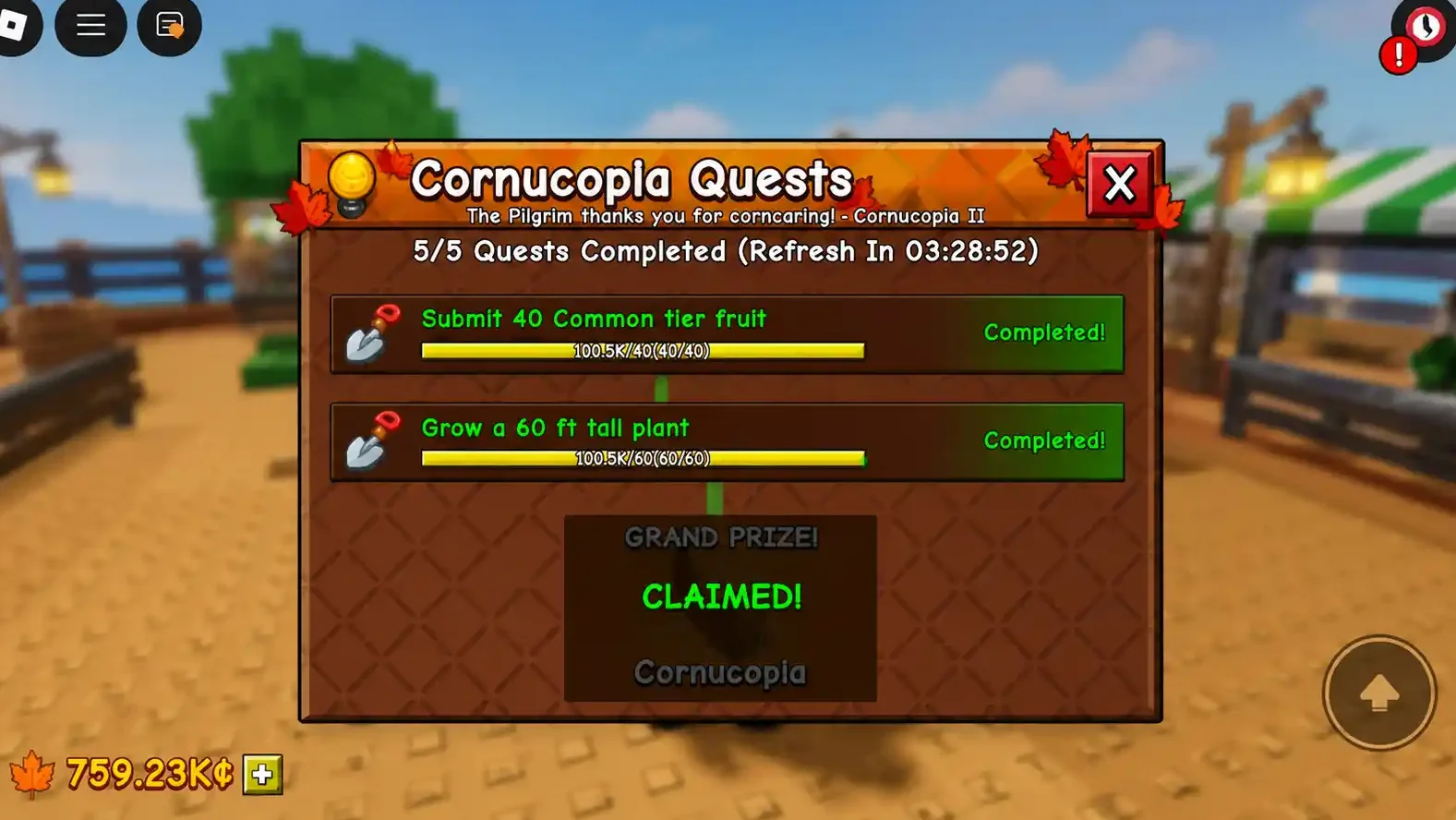
While the Cornucopia doesn’t hand you a stack of raw Leaves directly, the seeds, pets, eggs, crates, and seed packs it rolls are worth meaningfully more than the time it takes to complete the chain — and since only Common through Rare Maple crops are eligible for fruit-submission quests, you never have to sacrifice a high-value hold just to keep the chain moving. It’s also currently the single best path to a Shadow Dragon, with roughly a 0.15% roll chance from a Cornucopia crate compared to about 0.00464% from a direct shop spawn.
Hatching Fall Eggs and Opening Crates
Fall Harvest World introduced its own egg line — Common, Big, Mega, and Rainbow Fall Eggs — pulling from a pool of eight pets exclusive to this world. Several of these pets carry passive abilities that indirectly boost your Leaves income once hatched: Turkey periodically digs up a free seed on its own, and Swan waters nearby crops automatically to speed up growth cycles, both of which stretch your existing Leaves further without spending more of them.
Everything Leaves Can Buy in the Fall Harvest Shops
The Maple Seed Shop: Price Tiers by Rarity
The Fall Harvest Seed Shop prices its entire Maple crop line across six confirmed rarity tiers, and understanding this ladder is the fastest way to plan your farming rotation instead of guessing at what’s affordable:
| Rarity | Leaves Price Range | Example Crops |
| Common | 1 – 25 | Maple Carrot, Maple Strawberry, Maple Blueberry |
| Uncommon | 40 – 400 | Maple Tulip, Maple Tomato, Maple Apple |
| Rare | 700 – 10,000 | Maple Bamboo, Maple Corn, Maple Cactus, Maple Pineapple |
| Epic | 15,000 – 300,000 | Maple Mushroom, Maple Green Bean, Maple Banana, Maple Grape |
| Legendary–Mythic | Six figures and up | Higher-tier Maple variants, including Maple Venom Spitter |
| Super | Up to 140,000,000 | Amber Cranberry (the shop’s most expensive confirmed seed) |
Outside the Maple naming pattern, the shop also stocks standalone crops like Honeysuckle, Peach, Conifer Cone Sapling, and Jandel’s Beanstalk, none of which share pricing logic with the reskinned line above.
The Gear Shop and Magic Mail Pricing
The Gear Shop is where Leaves stop being about crop farming and start being about protecting your progress. It stocks Fall-exclusive tools alongside the three tiers of Magic Mail — the only consumable capable of sending an item out of Fall Harvest World and back into your Garden Valley mailbox:
| Tier | Price (Sheckles, bought in Garden Valley) | What It Can Send |
| Rare Magic Mail | 500,000 | Common, Uncommon, and Rare items only |
| Legendary Magic Mail | 5,000,000 | Everything up to and including Legendary |
| Super Magic Mail | 100,000,000 | Any rarity, including Mythic and Super |
Note the currency column: Magic Mail itself is priced in Sheckles, not Leaves, and it’s only purchasable from the Gear Shop while you’re still in Garden Valley. That’s a deliberate design decision — it forces you to plan ahead rather than farming a rare pull first and only then realizing you have no way to carry it home.
Plot Expansions and Fall Harvest Crates
Beyond seeds and gear, Leaves also fund plot expansions, which directly compound your future earning rate by giving you more simultaneous growing space, and a set of purchasable decor crates — the Fall Cosmetic Crate, Fall Structure Crate, Lantern Crate, and Cobblestone Crate. These lean cosmetic rather than functional, so most experienced players treat them as a later-priority purchase once Magic Mail and Cornucopia grinding are already covered.
The Two Biggest Leaves Purchases: Atlantic Giant Pumpkin vs Amber Cranberry
Once you’re past the early Maple rotation, two crops dominate the conversation about where to put a serious Leaves balance, and they solve completely different problems.
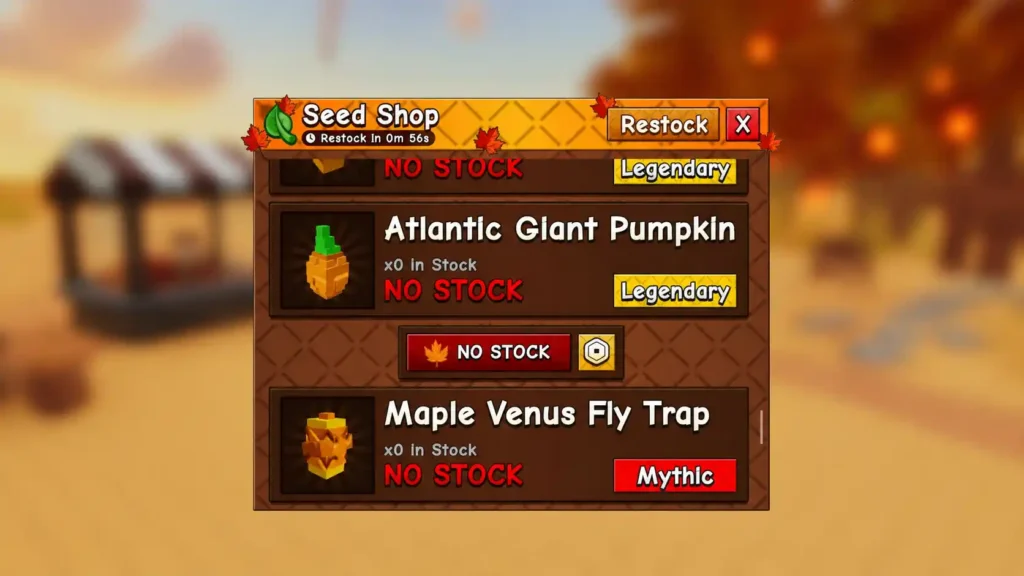
The Atlantic Giant Pumpkin costs 600,000 Leaves with a 2% Seed Shop stock chance, and its defining trait is that it never stops growing — both its physical size and its sell value keep climbing the longer it stays untouched, with an average sell value of roughly 300,000 Leaves per harvest. It’s immune to every mutation in the game, so its value comes purely from patience rather than luck, which makes it realistically obtainable within a single solid farming session.
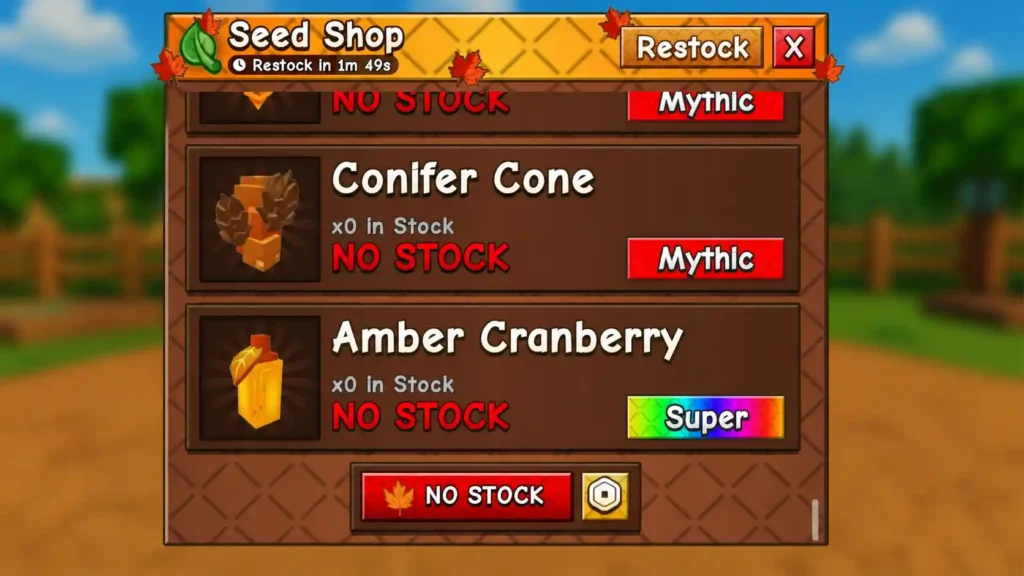
The Amber Cranberry sits at the opposite extreme: 140,000,000 Leaves with just a 0.07% stock chance, making it roughly 28 times rarer than the pumpkin. What justifies the price is its passive Amber mutation — a 5% chance for every growing fruit on your plot, not just its own, to receive a 20x sell-value multiplier. It’s a multi-harvest crop, so the investment keeps paying out and keeps generating mutation rolls indefinitely rather than being a single specimen purchase.
| Crop | Price | Stock Chance | Best For |
| Atlantic Giant Pumpkin | 600,000 Leaves | 2% | New players who want a fast, reliable Leaves-to-value trade |
| Amber Cranberry | 140,000,000 Leaves | 0.07% | Players with an established Leaves income chasing a long-term mutation engine |
Best Early Crops to Farm for Fast Leaves Income
If your goal is climbing from zero Leaves to a real bankroll as quickly as possible, the smartest approach mirrors how experienced players scale a Sheckle economy back in Garden Valley: don’t jump straight to the shop’s most expensive listing.
- Start with Common Maple crops — Carrot, Strawberry, and Blueberry — to build a small buffer without any real risk.
- Move into Uncommon and Rare tiers, like Maple Tomato and Maple Bamboo, once you’ve got a few thousand Leaves banked, since bamboo in particular converts fast growth and solid sell value into a strong early return.
- Clear out low-value plots once you can afford faster-growing options, since cheap crops eat plot space that better-paying crops should be occupying.
- Fold in daily Cornucopia Quests the entire time, since the crate rewards consistently outpace what the same time spent purely selling crops would generate.
Leaves vs Sheckles: A Side-by-Side Comparison
| Feature | Sheckles | Leaves |
| Where it’s used | Garden Valley (main game) | Fall Harvest World only |
| Where it’s earned | Selling crops, quests, gear across the permanent map | Selling Maple crops, Cornucopia Quests, Fall Eggs inside the event |
| Persistence | Permanent, no expiration | Tied to the 60-day Fall Harvest World window |
| Convertible to the other currency | No | No |
| Buys Magic Mail | Yes (only source) | No |
What Happens to Your Leaves When Fall Harvest World Closes
Fall Harvest World runs on a confirmed 60-day clock, closing at roughly October 1, 2026. There’s no confirmed conversion path from Leaves back into Sheckles, and any Leaves left unspent when the event ends simply become worthless the moment the world disappears — the same fate that awaits any Maple crop, pet, or seed pack you didn’t send home with Magic Mail.
The practical takeaway is straightforward: treat a growing Leaves balance late in the event as currency actively losing value, not as savings. Spending down toward zero on seeds, pets, or Magic Mail before the countdown finishes is a better outcome than logging in on the final day with millions of Leaves and nothing left worth buying.
Common Mistakes Players Make With the Leaves Economy
- Assuming Leaves and Sheckles share any value. They don’t convert, and treating a Leaves price like a Sheckle price will badly misjudge what something actually costs to obtain.
- Buying Magic Mail after entering Fall Harvest World. It’s a Sheckle purchase only available in Garden Valley — you cannot top up your supply once you’ve already teleported in.
- Auto-selling everything the moment it’s harvested. Several Cornucopia Quests require holding onto specific crops, and selling on sight means re-farming the exact item you just cashed in.
- Sitting on a large Leaves balance close to the 60-day deadline. Unspent Leaves don’t survive the event’s close, so hoarding late into the window is a guaranteed loss.
- Chasing the Amber Cranberry before building a stable income. At 140,000,000 Leaves and 0.07% odds, it’s an end-game goal, not a starter purchase — the Atlantic Giant Pumpkin is the far more realistic early target.
A Simple Leaves Spending Priority Checklist
- Bank at least one Rare Magic Mail in Sheckles before you ever cross into Fall Harvest World.
- Rotate cheap Maple crops until you’ve cleared your first few thousand Leaves.
- Clear the Pilgrim’s Cornucopia Quests daily rather than treating them as optional.
- Save toward the Atlantic Giant Pumpkin as your first big Leaves purchase.
- Budget for Legendary or Super Magic Mail ahead of any rare pet or crop pull, not after.
- Only chase the Amber Cranberry once your daily Leaves income is stable enough to absorb the wait.
- Spend down remaining Leaves on seeds, gear, or crates in the event’s final week rather than letting them expire unused.
Frequently Asked Questions
Final Thoughts
Leaves isn’t a side mechanic bolted onto Fall Harvest World — it’s the entire foundation the event runs on, and treating it like a reskinned version of Sheckles is the fastest way to waste weeks of farming. Once you understand that the two economies never touch, that Magic Mail has to be bought before you cross over, and that unspent Leaves have a hard expiration date, the rest of the strategy is mostly a matter of discipline: farm the cheap crops first, clear the Pilgrim’s quest chain every day, and spend deliberately rather than letting a balance sit idle while the 60-day clock keeps running.
This guide reflects the Leaves currency system as confirmed since Fall Harvest World’s launch on August 2, 2026, and will be updated if Splitting Point Studios adjusts pricing, drop rates, or the event’s closing date.

Grow a Garden 2 Fall Harvest World Guide: Leaves, Magic Mail, Cornucopia Quests & Everything New (2026)
Read Guide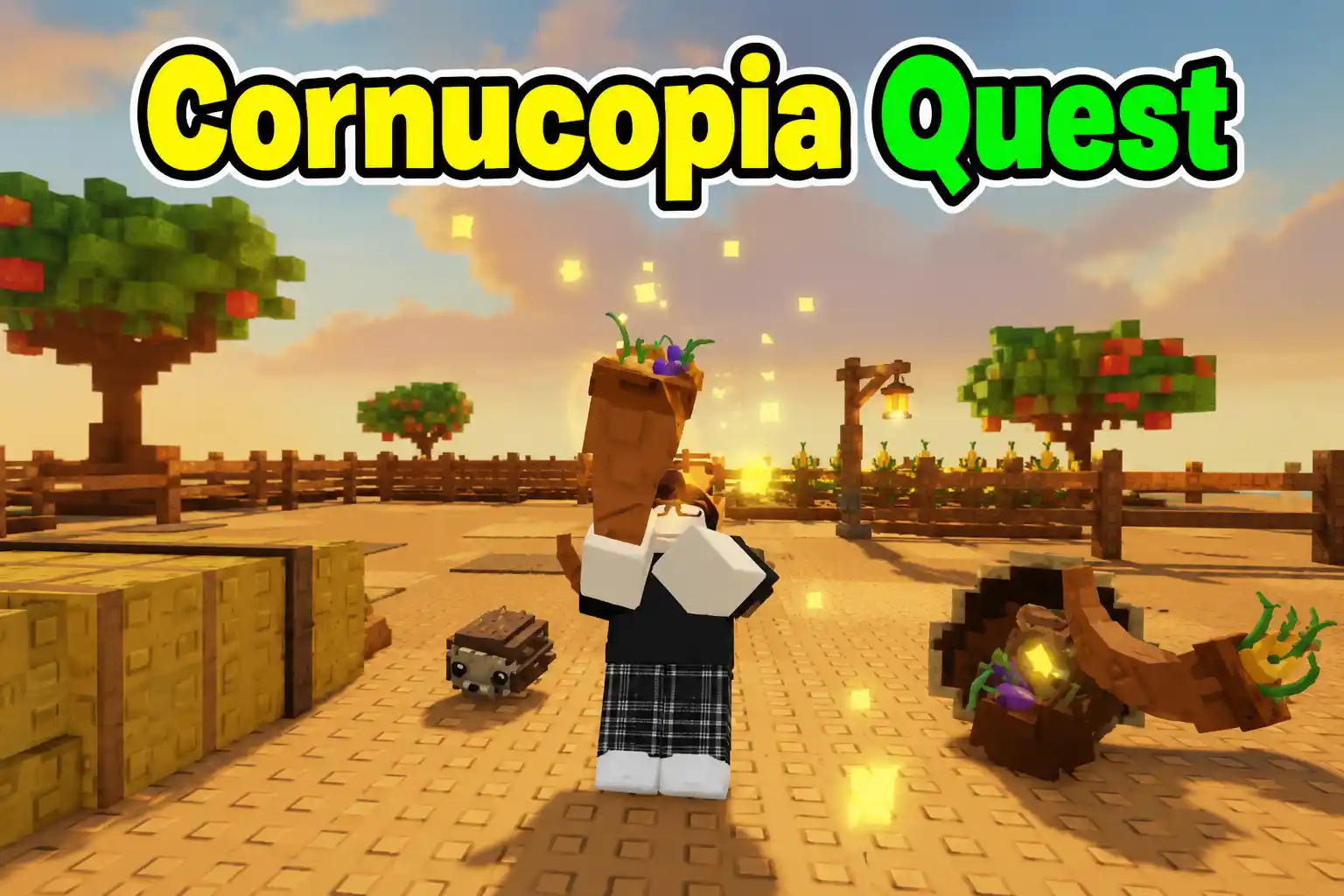
Grow a Garden 2 Cornucopia Quest Guide: Pilgrim, All Quest Types, Rewards & Shadow Dragon Odds (2026)
Read Guide
Grow a Garden 2 Magic Mail Guide: Every Tier, Price, and How to Use It Before Fall Harvest Closes (2026)
Read Guide
Grow a Garden 2 Atlantic Giant Pumpkin: Price, Stock Chance, Infinite Growth & Is It Worth 600,000 Leaves?
Read Guide
Grow a Garden 2 Amber Cranberry: Price, 0.07% Stock Odds, Amber Mutation & Full Value Breakdown (2026)
Read Guide